Teenage Gynecomastia
in Los Angeles, CA







Gynecomastia during the teenage years is common, yet that fact rarely makes it easier for the boy experiencing it. He may have no idea why his chest is changing or if it will eventually flatten. Parents face a different uncertainty: give it time, seek a medical opinion, or discuss treatment?
Dr. Joseph T. Cruise has spent more than 20 years treating gynecomastia and has performed over 5,000 male breast reduction procedures.
For families considering teenage gynecomastia treatment in Los Angeles, he provides a careful assessment of the teen’s development, chest anatomy, and how long the breast tissue has been present. Surgery is considered only when the timing and circumstances make sense for that individual patient.


Teenage gynecomastia, also called pubertal or adolescent gynecomastia, develops when a temporary imbalance between estrogen and testosterone stimulates glandular breast tissue. About half of teenage boys experience some degree of it during puberty. The tissue usually develops behind the nipple and areola and may affect one side, both sides evenly, or create noticeable asymmetry.
True gynecomastia involves the breast gland. Pseudo-gynecomastia is caused mainly by localized excess fat rather than glandular growth. Many teenagers have a combination of both. Weight loss can reduce fatty volume in the chest area, but established glandular tissue may remain even in a lean, athletic teenager.
Gynecomastia is generally benign. Medical evaluation should still rule out an underlying cause, especially when enlarged breasts develop rapidly, cause significant pain, produce nipple discharge, or occur with other unusual physical changes. Certain medications and substances can also disrupt normal hormone production. Dr. Cruise reviews the teen’s medical history, medications, supplements, and development before discussing treatment options. Families can read more about the practice’s approach to gynecomastia diagnosis.
Most cases improve naturally as puberty progresses, often within six months to two years. For a recently developed, otherwise typical case, periodic observation may be the most appropriate next step.
Tissue that has remained essentially unchanged for 12 to 24 months is less likely to disappear, particularly when puberty is nearing completion. Dense gland beneath a puffy nipple behaves differently from soft chest fat, and significant asymmetry deserves closer examination.
A consultation does not commit a family to surgery, but it does provide a clearer answer about what type of tissue is present, if the chest is still changing, and if continued observation is reasonable.


A teenager may be a good candidate for gynecomastia surgery when breast development has remained stable, he is in good health and at a stable weight, and any medical or medication-related cause has been addressed. He should be mature enough to understand the procedure, follow recovery instructions, and express his own interest in treatment.
Dr. Cruise also considers the shape of the chest, skin quality, body weight, nipple position, and the amount of glandular tissue and fat. Persistent gynecomastia may influence clothing choices, posture, sports participation, self-confidence, and self-esteem. Counseling or psychological support can also be helpful when the condition causes significant emotional distress. Gynecomastia surgery should reflect the teen’s wishes.
Who Should Wait?
Continued observation may be recommended when gynecomastia appeared recently, the chest is still changing, or puberty is in an earlier stage. Surgery may also be postponed for an untreated hormonal condition, an unstable weight, nicotine use, anabolic steroid use, or a medication that may be contributing to breast development. Prescription medication should never be stopped without guidance from the prescribing clinician.
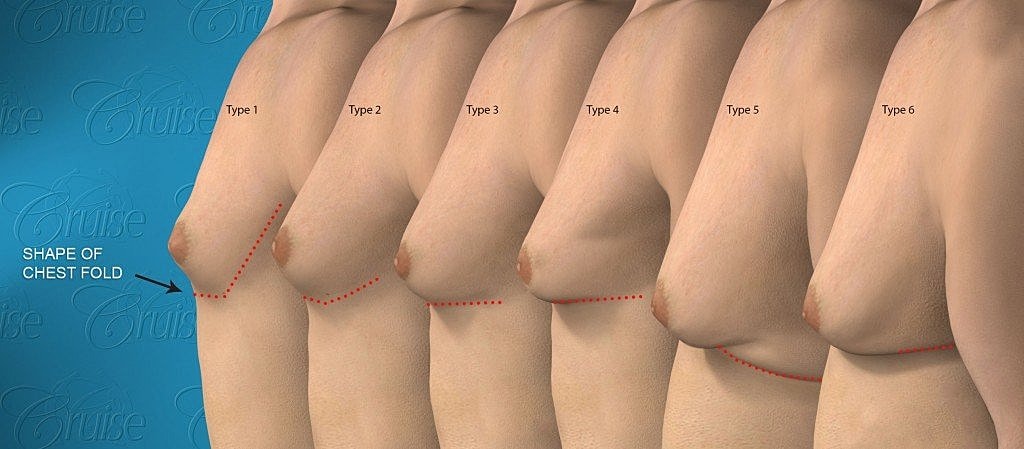
Dr. Cruise created the six-type Cruise Classification System after treating thousands of gynecomastia patients. It evaluates the location and volume of breast tissue, nipple position, skin laxity, and the chest fold extending toward the armpit.
Teenagers often have Type 1 gynecomastia, commonly described as puffy nipples, or Type 2 gynecomastia, where breast tissue extends more broadly across the lower chest. Some patients have greater volume, loose skin, or significant asymmetry. Classifying the chest helps Dr. Cruise determine where tissue should be removed, if fat removal is needed, and how to preserve support beneath the areola. Removing too much tissue can leave a depression or “crater,” while removing too little may leave continued projection.
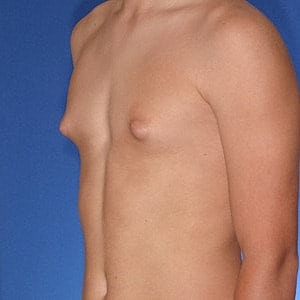
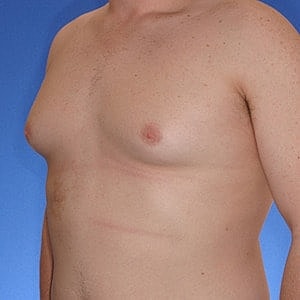
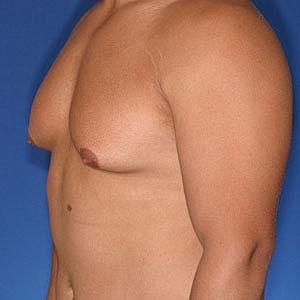
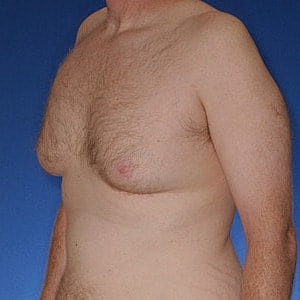
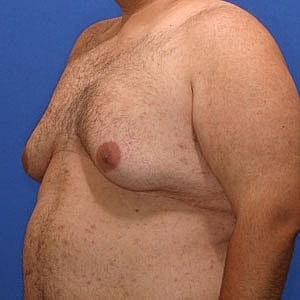
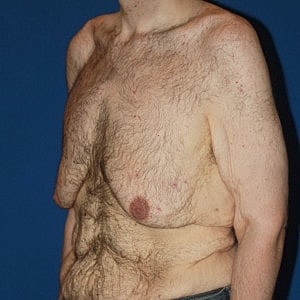
Teenage male breast reduction is typically an outpatient procedure performed under general anesthesia. Surgery commonly takes one to two hours, although the time varies with the amount of tissue and the techniques required.
Dense glandular tissue is removed through direct excision, usually through a small incision placed along the border of the areola. Liposuction addresses excess fat across the chest or toward the armpit. A teenager with loose skin or a low nipple position may require a different incision and limited skin removal. Dr. Cruise explains the expected scar and chest shape before surgery.
The operation is planned around the patient’s full chest rather than the gland alone. Dr. Cruise evaluates how the nipple, remaining tissue, skin, and pectoral border should meet after healing. This supports a smooth, age-appropriate contour.
For the right patient, gynecomastia surgery can provide physical and personal benefits that continue well beyond recovery:
Results vary with anatomy, skin quality, healing, and the extent of surgery.


Most teens spend the first few days resting at home and can begin light activities soon after surgery. Swelling, bruising, tightness, and temporary changes in sensation are expected early on. A compression garment is typically worn for several weeks to support the chest and help control swelling while the tissues begin settling.
Many gynecomastia patients return to school within several days, depending on comfort and the physical demands of the school day. Running, contact sports, heavy lifting, and direct chest exercise remain restricted until Dr. Cruise confirms that healing is far enough along. Full activity often resumes over three to four weeks, although more extensive procedures may require additional time.
The chest will look different immediately, but swelling can temporarily blur the contour. Final results become clearer as swelling subsides and the skin adapts over the next several months. Follow-up visits allow Dr. Cruise to check incisions, symmetry, and healing.
Male breast reduction removes the glandular tissue and fat responsible for the enlarged contour. The removed tissue does not grow back, although the remaining breast tissue can respond to future hormonal changes, significant weight gain, certain medications, or anabolic steroids.
Scars are permanent, though they generally soften and fade with time. Their location depends on the type of gynecomastia and the amount of skin that needs to be addressed. Families can compare cases with similar anatomy in Dr. Cruise’s gynecomastia before-and-after gallery.
Dr. Cruise is a board-certified plastic surgeon who has made male chest surgery a major focus of his practice. More than 70% of his patients are male, and his experience includes over 5,000 gynecomastia procedures spanning puffy nipples, asymmetry, larger-volume chests, excess skin, and revision cases.
That case volume has sharpened his judgment around tissue thickness, nipple support, incision placement, and the transition into the surrounding chest. Parents also receive a direct recommendation about timing. If your chest needs more time to develop, Dr. Cruise will say so. Read more about Dr. Joseph T. Cruise and his gynecomastia focus.

Cost depends on the gynecomastia type, the amount of gland and fat being removed, the incision pattern, anesthesia, and facility fees.
A straightforward puffy-nipple correction has different requirements from surgery involving broader breast tissue, asymmetry, or excess skin.
The practice provides an individualized quote after Dr. Cruise examines the chest and defines the surgical plan. Families interested in payment options can review the practice’s gynecomastia surgery financing information.
Age 18 is not a universal medical cutoff. Dr. Cruise considers physical development, how long the gynecomastia has remained stable, overall health, emotional maturity, and the teen’s own reasons for requesting treatment. A parent or legal guardian must participate in decisions and consent for a minor.
Exercise may reduce chest fat and build the pectoral muscles, but it cannot remove established glandular tissue. In some athletic teens, additional muscle can make a firm gland beneath the nipple appear more noticeable.
The tissue removed during surgery is gone permanently. Recurrence is uncommon after appropriate timing and treatment, though remaining tissue can enlarge in response to hormonal changes, certain medications, anabolic steroids, or major weight gain.
Gynecomastia surgery is an established procedure for appropriately selected adolescents. Risks include bleeding, infection, fluid accumulation, changes in nipple sensation, asymmetry, contour irregularities, scarring, and the possibility of revision surgery. Dr. Cruise reviews these risks with the teen and parent before consent.
Coverage varies by insurer and plan. Some policies classify the procedure as cosmetic, while others may consider coverage when documented medical criteria are met. Families should contact their insurer directly for current requirements.
If your son’s chest has remained enlarged or puffy and your family wants a specialist’s opinion, Dr. Cruise can assess his development, anatomy, and treatment timing.
Contact Cruise Plastic Surgery to schedule a personal consultation at the Los Angeles or Newport Beach office.


