






Adult gynecomastia is rarely discussed openly, even though it affects a large number of men. The condition involves the development of glandular breast tissue, often accompanied by excess fat or loose skin. Depending on your anatomy, it may create subtle projection around the nipples, noticeable breast volume, or a heavier, lower chest contour.
The physical change can carry a much larger emotional burden. Men may spend years dressing around their chest, feeling uncomfortable in social settings, or avoiding activities they would otherwise enjoy. Dr. Joseph T. Cruise has treated thousands of patients who understand that experience firsthand. His practice has a strong specialization in male chest surgery, with men making up more than 70% of his patient population.
For Los Angeles men ready to understand their options, gynecomastia surgery offers an effective way to address the tissue causing the enlargement. Dr. Cruise and his team provide a private, supportive environment where you can learn what is contributing to your chest shape and which treatment options may be appropriate. You’ll receive straightforward medical guidance, realistic expectations, and the space to make your own decision about moving forward.


Gynecomastia is the growth of breast tissue in boys or men. In adults, it may be associated with hormonal imbalance, aging, significant weight gain, anabolic steroids, certain medications, or an underlying medical condition, though some cases have no clear cause.
True gynecomastia contains firm glandular tissue that exercise and weight loss cannot remove. Other men primarily have excess fat, and many have both. Loose skin may also contribute.
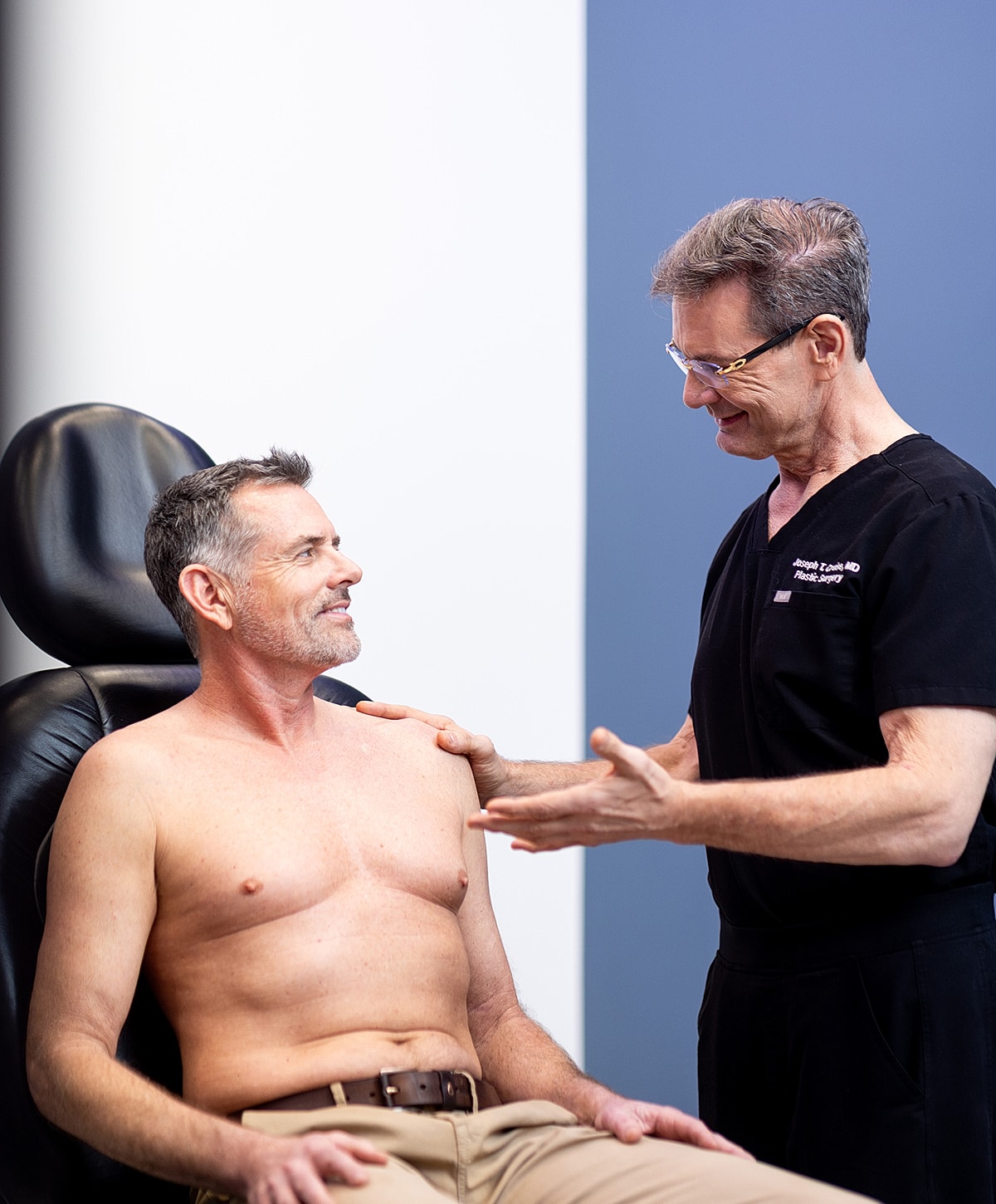
Dr. Cruise reviews your medical history and examines the composition of your chest before recommending treatment. Blood tests may be appropriate when hormone or testosterone levels are a concern. Sudden enlargement, pain, a one-sided mass, or nipple discharge should also receive medical evaluation.
Surgery is a personal choice. You may be ready to consider it if you routinely hide your chest, avoid fitted shirts, or remain frustrated after diet and exercise have failed to help.
Good candidates are generally healthy, at or near a stable weight, and realistic about what male breast reduction surgery can accomplish. The breast development should also be stable. Once glandular tissue has formed and remained present, surgery is the only proven way to remove it permanently.
Once glandular tissue has developed and remained stable, surgery is the only proven way to remove it permanently. Dr. Cruise provides honest recommendations, but the choice to proceed belongs to you.
Surgery may need to be postponed if your gynecomastia is related to an untreated hormonal imbalance, an underlying medical condition, certain medications, anabolic steroids, or ongoing weight changes. Younger patients whose breast development is still changing may also benefit from waiting until the condition has remained stable. Addressing these factors first can improve surgical safety and reduce the risk of gynecomastia returning.

Gynecomastia treatment can correct puffy nipples, firm tissue behind the areola, excess fat, asymmetry, loose skin, and excess tissue extending toward the armpit. More involved cases may require larger incisions, but every procedure is planned to create a firm, proportionate chest.
Gynecomastia surgery removes the excess tissue responsible for unwanted breast volume and reshapes the chest around a more masculine contour. Depending on your anatomy and treatment plan, benefits may include:
Dr. Cruise carefully controls how much tissue is removed to avoid dents, irregularities, or an overly hollow appearance. The goal is a natural-looking chest that fits your build.
Male breast reduction surgery removes the particular combination of tissue affecting your chest. Liposuction addresses excess fat through tiny incisions. Direct excision removes dense glandular tissue through a small incision, commonly placed along the areola. Severe cases may require excess skin removal and nipple repositioning.
Dr. Cruise uses his six-type Cruise Classification System to evaluate breast volume, skin quality, nipple position, and tissue extending toward the armpit. This guides the surgical plan and helps him minimize scarring without leaving the chest undercorrected or unnaturally hollow. The gynecomastia procedure is performed on an outpatient basis and generally takes one to two hours.
Most patients return to desk work and light activity within a few days to about one week. A supportive compression garment helps reduce swelling while the chest heals. Surgical drains may be used after extensive tissue or skin removal.
Light exercise resumes gradually. Vigorous exercise, chest training, and heavy lifting generally remain restricted for several weeks. Dr. Cruise’s team provides detailed aftercare instructions and follows your progress throughout the recovery process.

You’ll see a flatter chest soon after surgery, although swelling temporarily softens the definition. Final results develop over the following weeks and months.
Removed glandular tissue does not grow back. Maintaining a stable weight and controlling any contributing hormonal or medication-related cause help preserve the result.
Dr. Cruise is a board-certified plastic surgeon with more than 20 years of experience treating gynecomastia and over 5,000 procedures performed. His cases range from isolated puffy nipples to severe skin excess and previous surgery requiring correction.
Each treatment plan reflects the patient’s anatomy, with close attention to masculine proportions, predictable results, and careful scar placement.

Meet with Dr. Cruise in Los Angeles or begin with a Fast Track virtual consultation. You’ll receive an assessment of your gynecomastia type, a clear treatment recommendation, and time to ask questions without pressure.
Contact Dr. Cruise Plastic Surgery to schedule your consultation.
Cost depends on your gynecomastia type, anesthesia, and surgical techniques. You’ll receive individualized pricing after your consultation.
It sometimes resolves during puberty. Persistent glandular tissue in adults generally does not disappear without surgery.
Most patients describe soreness or tightness. Medication helps keep early discomfort manageable.
Every surgical procedure leaves scars. Dr. Cruise uses the smallest practical incisions and places them carefully to minimize visibility.
Light activity may begin after about one week. Heavy lifting and chest exercise are usually restricted for approximately four weeks.
Recurrence is uncommon when the gland is properly removed and the original cause has been addressed.


