Skin Excess Gynecomastia







When gynecomastia involves more than just excess breast tissue under the nipple—and results in sagging skin, poor contour, and loss of chest definition—it’s often classified as skin excess gynecomastia. This condition is most common in men who have experienced massive weight loss, older adults with long-standing gynecomastia, or patients with severe gynecomastia left untreated for years. Skin excess cannot be corrected with gland tissue removal alone. A comprehensive surgical approach is needed to restore the natural shape of the male chest.
Dr. Joseph T. Cruise is a board-certified plastic surgeon who has performed over 5,000 gynecomastia surgeries, including hundreds involving skin excision, male breast reduction, and chest reshaping after weight loss. His approach addresses every layer involved—from glandular tissue to skin laxity—to achieve clean lines, flat contours, and long-term satisfaction.


Skin excess gynecomastia, sometimes called weight loss gynecomastia, refers to any man who has skin laxity resulting from massive weight loss, weight fluctuation, or the aging process.
Individuals who fall into this category range from having moderate to severe skin laxity. There is almost always a component of fatty tissue, breast tissue, or both. The majority of patients falling into this demographic had some degree of gynecomastia beforehand, but now have saggy breasts resulting from skin excess and laxity. A man has true gynecomastia only if the breasts have a component of excess breast tissue (with or without fat) present. If not, it is just a case of excess saggy skin.
Most of the patients Dr. Cruise treats for skin excess gynecomastia have severe breast sag and breast tissue, which extends into the armpit and around the back, creating a breast roll with back roll. Corrective surgery requires a skilled surgeon with expertise in this speciality. Gynecomastia expert Dr. Joseph Cruise treats this type of gynecomastia on a regular basis using his advanced surgical techniques.
In many patients, gynecomastia surgery focuses on removing glandular tissue and fat, especially when skin quality is good. However, in cases with loose skin or diminished elasticity, simply removing volume leaves behind skin excess that hangs, folds, or hides muscle tone.
That’s why Dr. Cruise recommends a personalized treatment plan that addresses not only the excess breast tissue, but also how to remove excess skin, reposition the nipple areola complex, and maintain a masculine contour. In moderate skin laxity or extreme cases, ignoring skin excess leads to disappointing results or the need for a secondary procedure.

1 of 2
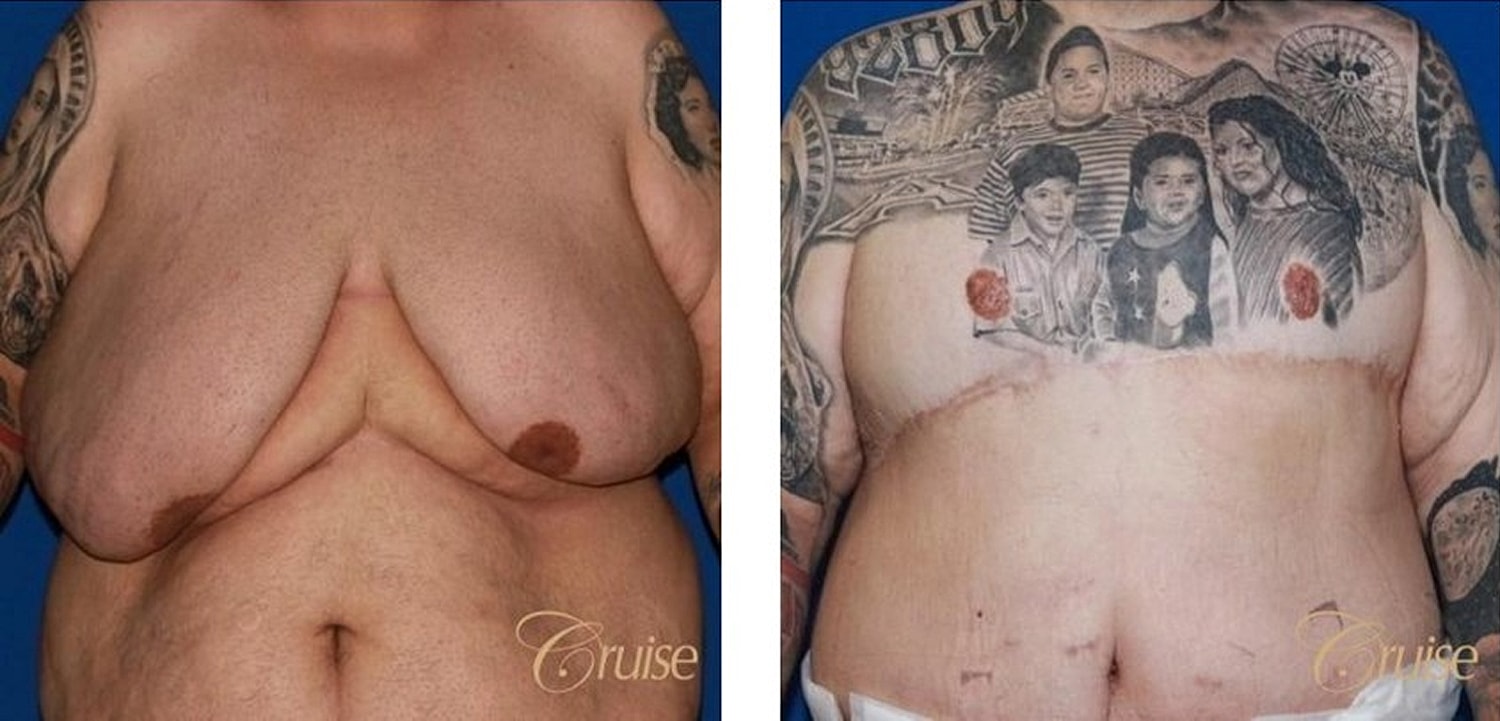
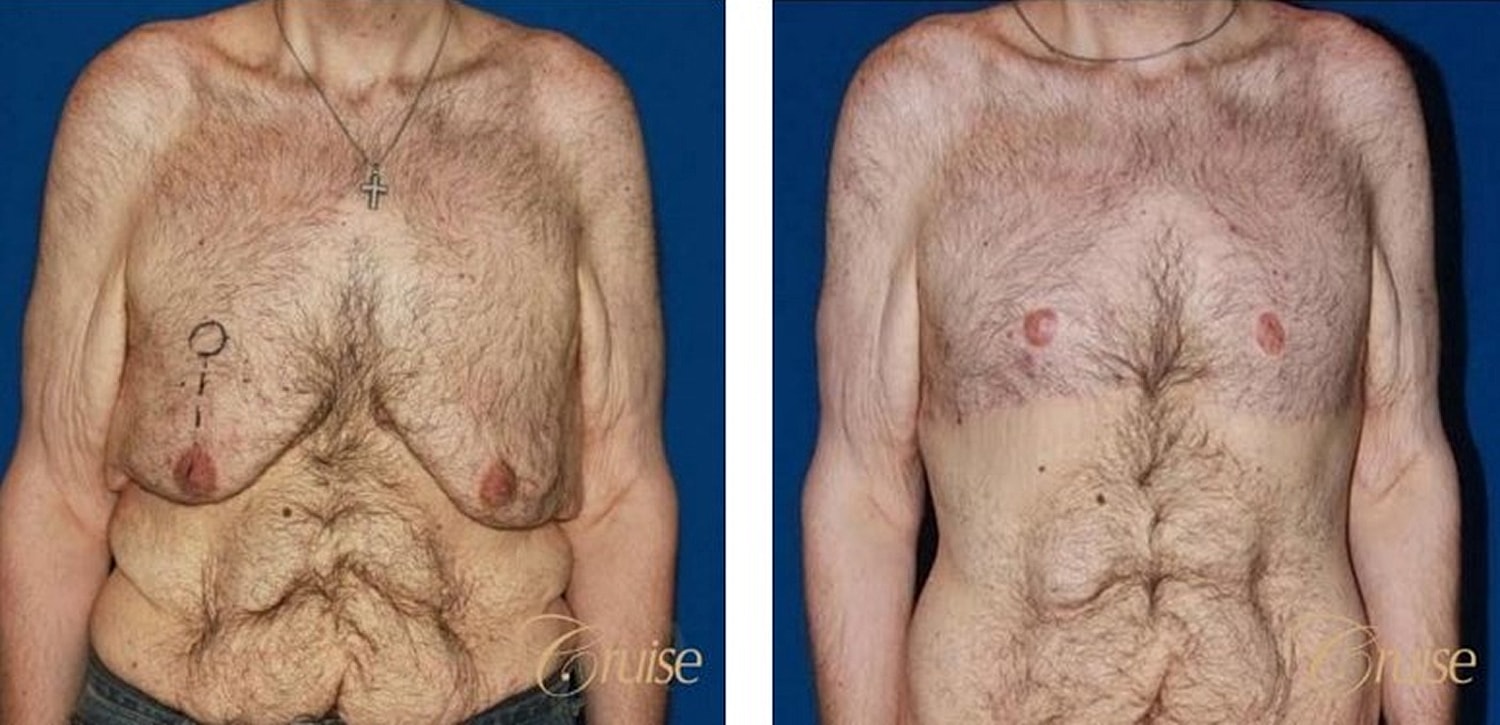

Dr. Cruise has developed a classification system for the Types of Gynecomastia along with the treatment plan for each. Most of the patients Dr. Cruise treats for this category of gynecomastia fall into Type 5 or 6.
The technique used by Dr. Cruise can vary from patient to patient, but most frequently, a chest lift with free nipple graft is performed. Dr. Cruise performs skin excess gynecomastia surgery at an accredited Orange County surgical facility. The procedure typically lasts 2–3 hours and is performed under general anesthesia. Possible steps include:
After surgery, a compression garment is applied to reduce swelling and support smooth healing. Patients return home the same day with detailed aftercare guidelines in place.
Only you can answer this question. The decision to have gynecomastia surgery is not one of medical need, but rather one of emotional need.
Many men who have had success in losing significant weight are depressed about the effect it had on their body. Some men are so unhappy with the appearance of their body after surgery that they start to regret losing the weight in the first place.
If your gynecomastia combined with sagging skin is negatively impacting your daily life, you may want to consider your surgical options.

Each patient presents differently. Dr. Cruise conducts a full physical examination and reviews your medical history to determine the right approach. Patients should be close to their goal weight, in good health, and have realistic expectations about scarring, healing, and surgical outcomes.
Many men with skin excess gynecomastia report a constant disconnect between their physical appearance and the effort they’ve put into weight loss or fitness. Breast enlargement and visible skin laxity often lead to chronic frustration, low self-esteem, and difficulty finding clothes that fit properly.
Surgery can help restore:
Male breast reduction surgery isn’t just about aesthetics—it’s about eliminating a daily burden and reclaiming confidence.
Recovery is generally smooth, though slightly longer than with standard gynecomastia procedures due to the additional skin removal. Most patients resume light activity within a few days, wearing a compression garment to reduce swelling and support the healing chest contour.
Discomfort is typically mild and managed with medication. Full physical activity is usually allowed by 3 to 4 weeks, with ongoing support from Dr. Cruise’s team to ensure a successful healing process and optimal aesthetic result.
Skin excess gynecomastia surgery creates a flatter, firmer, and more defined chest by removing both the underlying breast tissue and the loose, sagging skin that distorts your chest’s natural contours. For men who have lost a significant amount of weight or lived with long-standing gynecomastia, the results can be dramatic, restoring a chest shape that aligns with the rest of the body and finally reflects their efforts.
While initial improvements are visible almost immediately, the final outcome becomes more refined over several weeks as swelling subsides and the skin adjusts to its new position. With a stable body weight and no new hormonal stimulation, results are permanent. Most patients report not just physical improvement, but a significant boost in confidence, freedom in clothing choices, and comfort in day-to-day life.

Dr. Joseph T. Cruise is a board-certified plastic surgeon with extensive experience treating all forms of gynecomastia, including advanced cases involving excess skin. Having performed over 5,000 procedures, he brings a high level of surgical skill and a deep understanding of male chest aesthetics.
His treatment plans go beyond removing excess breast tissue—they account for skin laxity, nipple position, and long-term contours. For patients dealing with sagging skin after weight loss or long-term gynecomastia, Dr. Cruise offers focused, natural-looking results with minimal scarring and lasting impact.

If you’re dealing with skin excess gynecomastia after significant weight loss or prolonged gland growth, gynecomastia surgery can restore balance and confidence. Call our Newport Beach office at 949-644-4808 or contact us online to schedule a private consultation with Dr. Cruise.
Explore our gallery of male breast reduction cases, including skin excision, free nipple graft, and breast reduction after weight loss. See what’s possible with the right surgeon, plan, and follow-through.
On average, skin excess gynecomastia surgery ranges between $13,000 and $16,000. The cost can vary dramatically from patient to patient. You will find your total cost at your consultation with Dr. Cruise on the phone or in-person at his Newport Beach gynecomastia practice.
All skin excision procedures involve incisions, which do leave scars. However, Dr. Cruise places incisions strategically to minimize visibility and promote optimal healing. Over time, scarring typically fades and becomes much less noticeable, especially when compression garments and proper aftercare are used.
Most patients can resume light activity within a few days, but recovery time varies depending on the extent of tissue and skin removal. Full recovery, including return to exercise and normal routines, typically takes three to four weeks. Wearing compression garments helps reduce swelling and support healing.
Yes. Once excess breast tissue and skin are removed, results are generally permanent—provided your body weight remains stable and there’s no new hormonal stimulation of breast development. Dr. Cruise provides long-term follow-up to help maintain satisfactory results.
Yes. Male breast reduction for patients with skin excess involves more than just removing glandular tissue. It requires a more complex surgical plan, including skin excision, managing excess skin folds, and in some cases, reshaping the chest with advanced techniques like free nipple grafting.
Skin laxity is often caused by prolonged stretching from glandular or fatty breast tissue. It can also result from rapid weight loss, aging, or the natural loss of collagen in the skin. In gynecomastia patients, this can create a deflated or sagging appearance that only surgery can fully correct.
Radiofrequency energy treatments may offer mild skin tightening for patients with only moderate skin laxity, but it is not a substitute for surgery in severe cases. For men with significant sagging or excess skin, surgical excision remains the most effective and predictable option.


