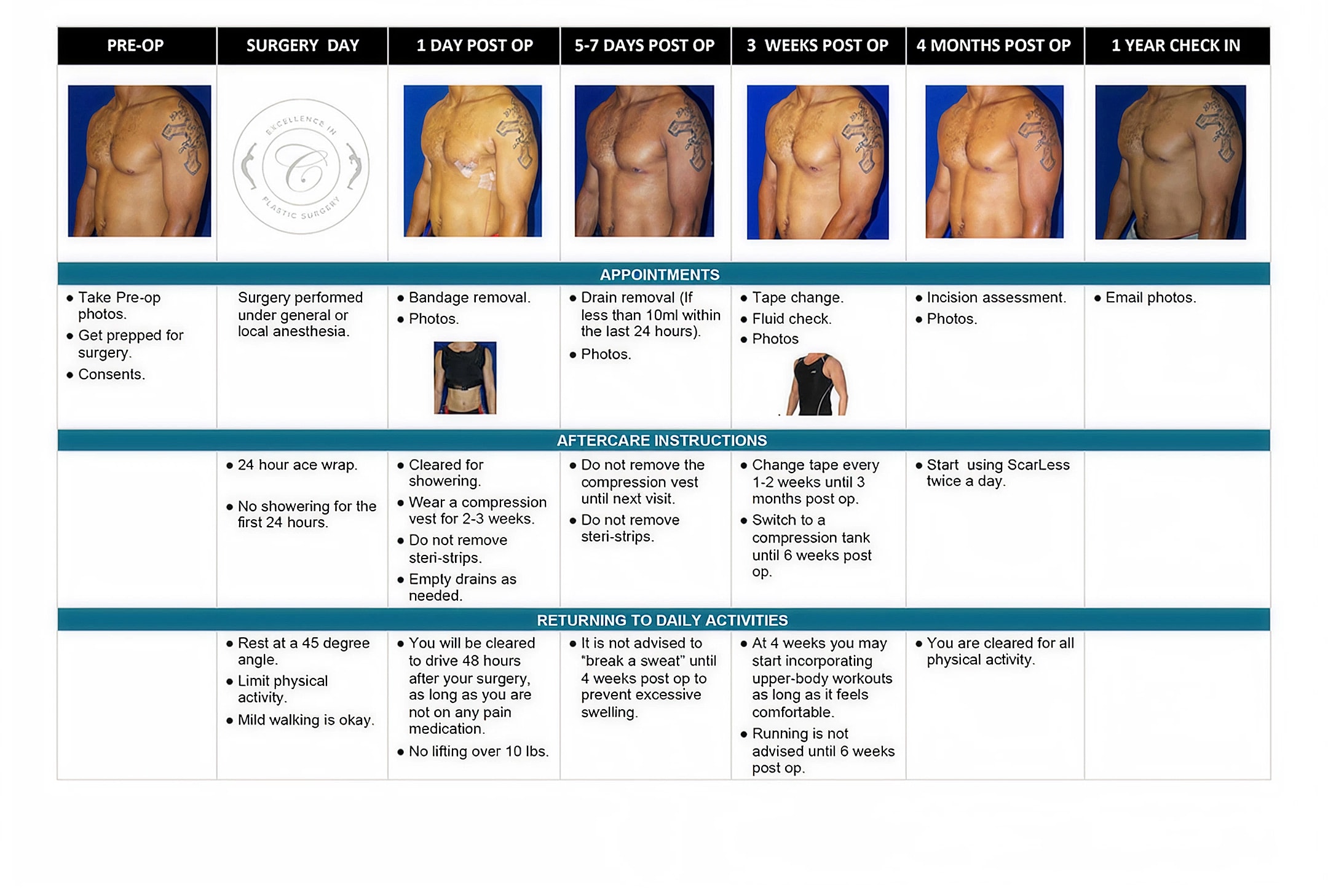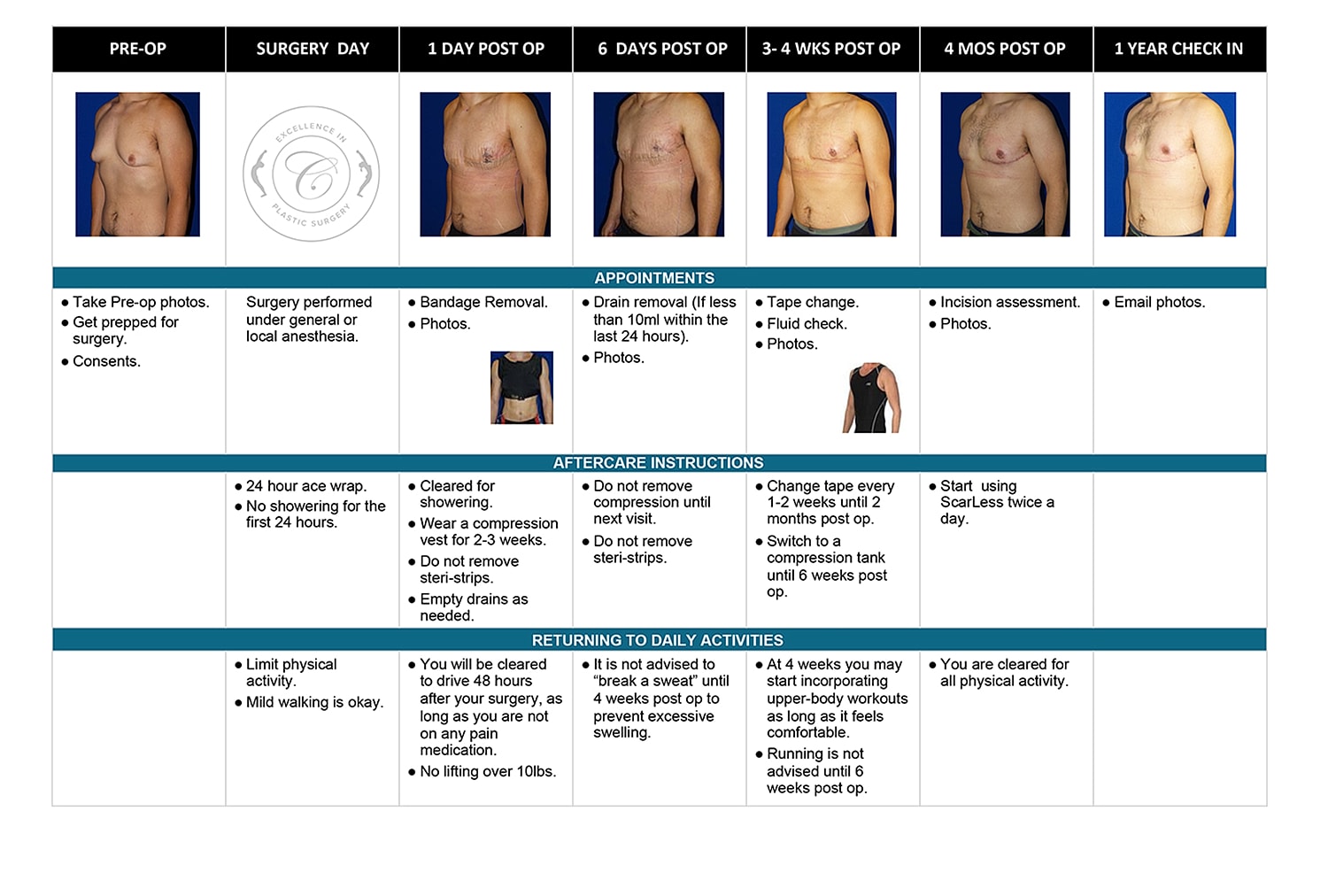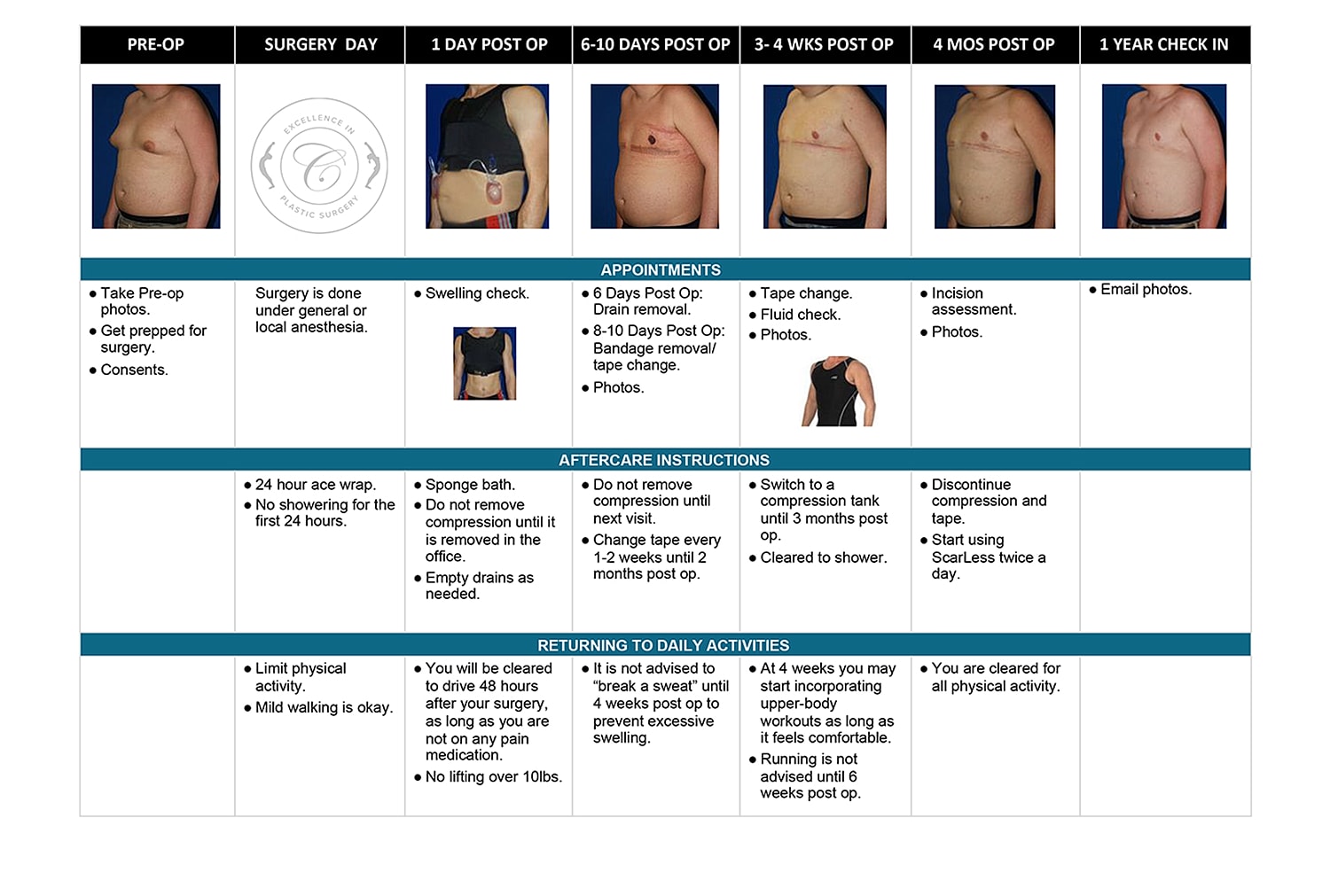





The images below represent a standard gynecomastia healing process for each type of incision used (areola, extended periareolar, nipple repositioning/free nipple graft).
The charts document the recovery timeline so you are familiar with what to expect at each stage after your gynecomastia surgery in Los Angeles.

This section provides detailed information about some of the issues that can arise during the gynecomastia healing process following surgery. Some patients may experience none of the items listed, while others may experience one or more.
Use this information as a helpful resource should any of these apply to you. And, as always, please contact our office should you have a concern with your gynecomastia healing process.

Natural variations in muscle tension, skin elasticity, or fluid retention. Asymmetric swelling is the most common side effect you may encounter during the gynecomastia healing process. There are several factors that can cause this. Whenever dealing with pairs of any body part, you are likely to have asymmetric swelling. This can be caused by one muscle being stronger or more tense than the other, skin elasticity, more breast tissue on one side, fluid retention from the numbing medication, etc. This is all very normal and will get better as swelling goes down.
Use a compression vest as directed and apply ice for the first two weeks to help with swelling reduction and proper drainage. Compression is extremely important during the gynecomastia healing process and plays a big part in assisting the swelling and fluid to drain out as it promotes proper blood circulation, also helping to prevent blood clots from forming. Compression also insures the skin heals nice and flat to the chest wall. We also recommend icing for the first 2 weeks following surgery.

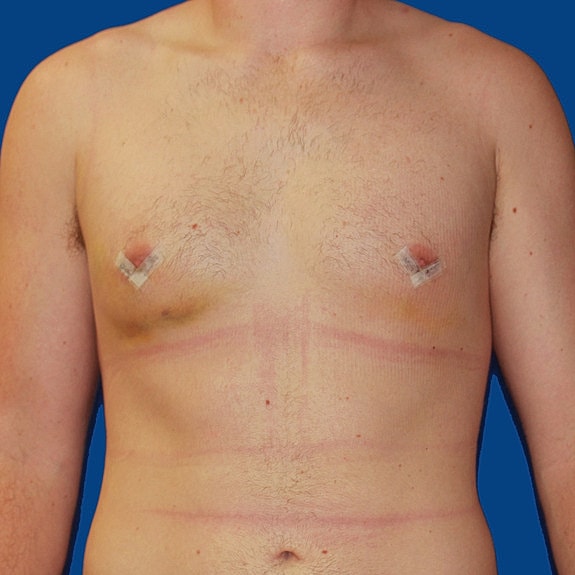
2 weeks after surgery patient noticed more swelling and minor bruising on his right side.
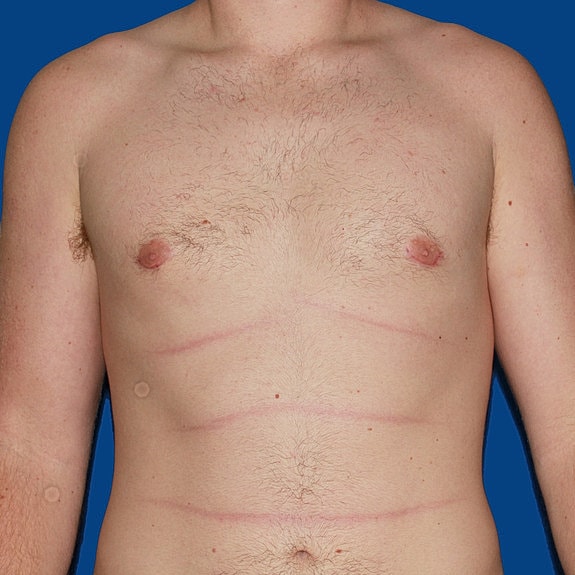
After swelling and bruising went down, his chest now appears symmetric and flat.
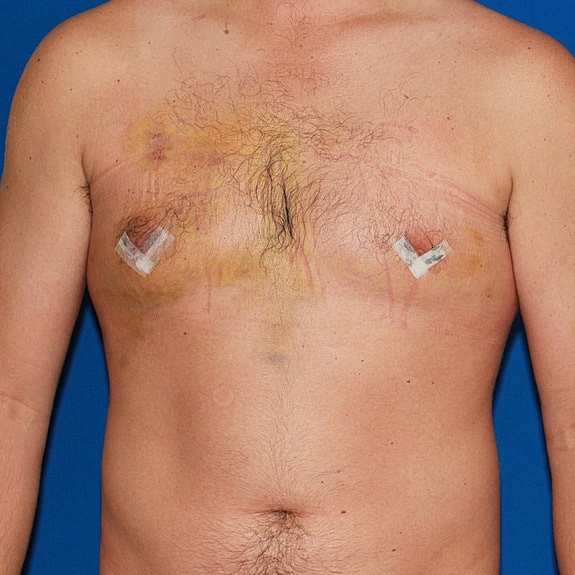
1 week after surgery this patient developed a small seroma on the right side only.
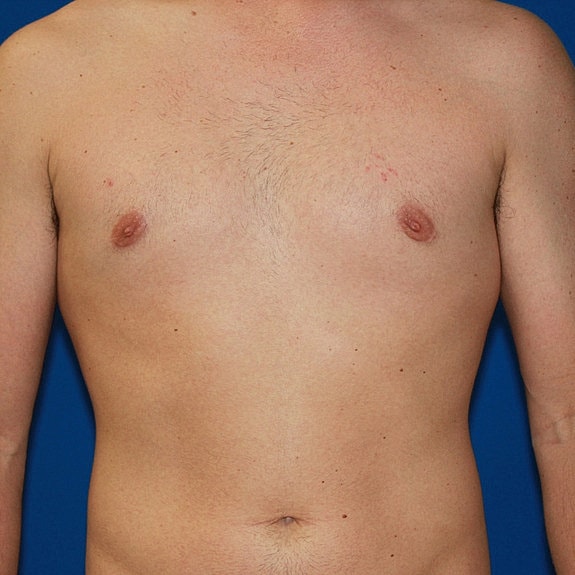
At his 3-month follow-up, the seroma is gone and did not affect his final result.
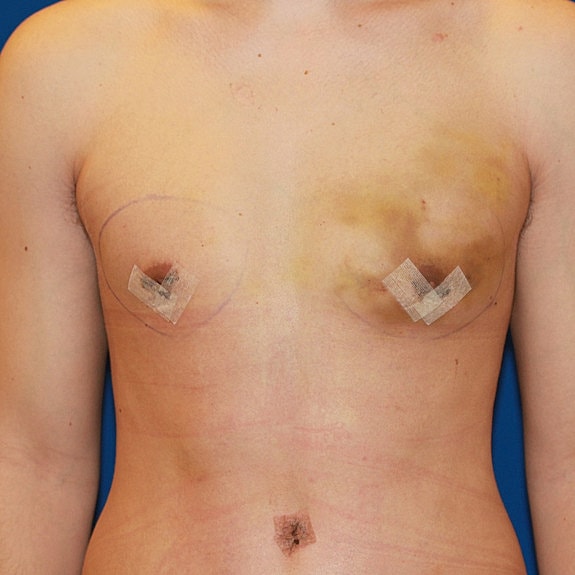
This photo was taken 5 days after surgery. Notice the left side has more swelling and bruising.
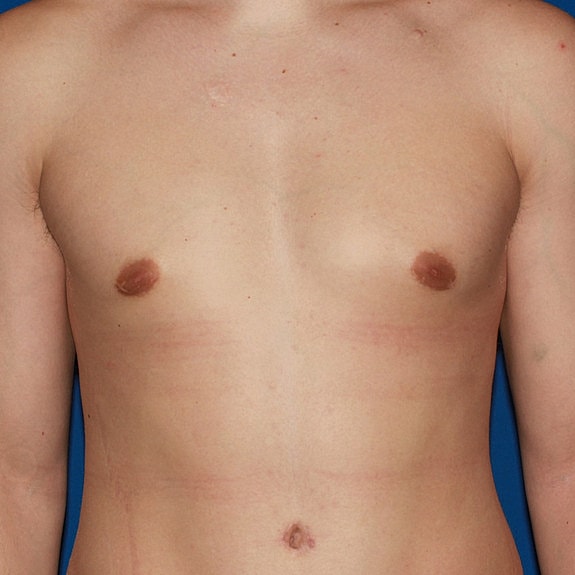
At 8 months post op, the swelling has gone down and the chest has flattened.
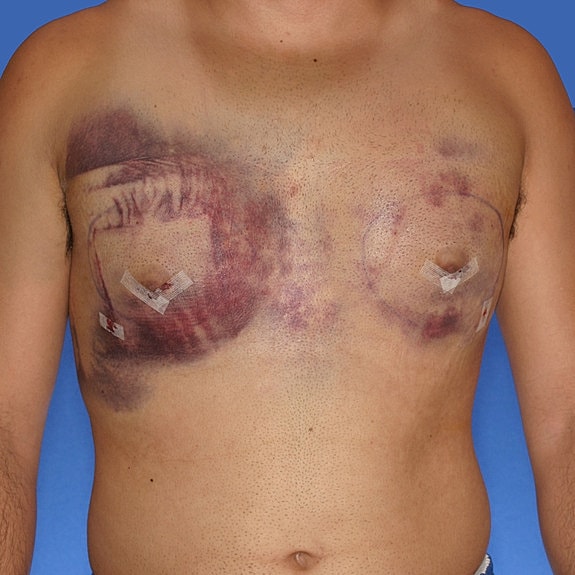
This photo was taken 5 days after surgery. The right side has deep bruising and swelling.
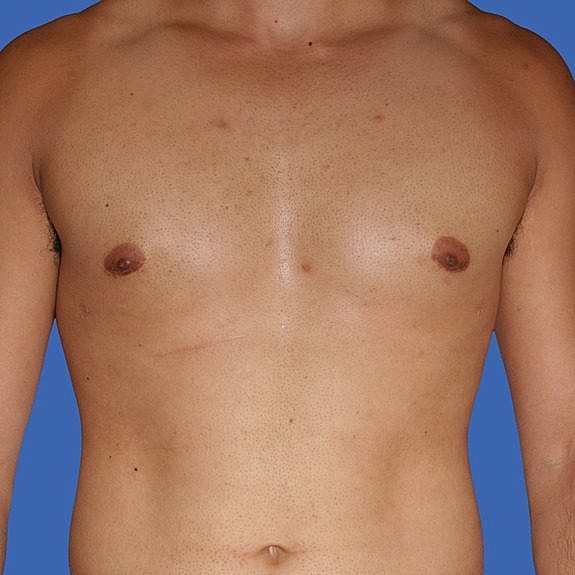
At his one year post op all the swelling and bruising is gone and chest healed symmetrically.
Most indentations resolve naturally within a few months. No treatment is typically needed.
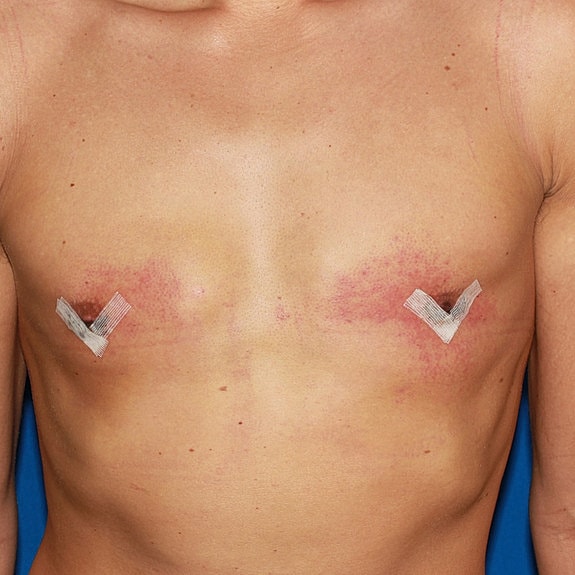
Patient has an indentation on the left breast to the left of the areola.
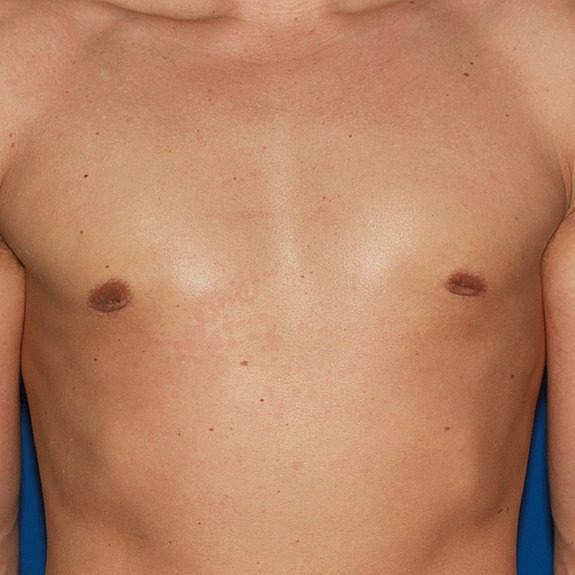
Indentation has flattened out. Chest appears smooth & flat.
With almost any surgery involving incisions nerves get cut and can take several months to regain full sensation. Most patients will experience numbness during the gynecomastia healing process but may not notice other side effects depending on the area of operation.
With gynecomastia surgery, the incision is made around the areola to conceal the scar, and since nerves get cut, the patient will typically experience some degree of numbness after surgery often followed with inverted nipples due to the nerves being temporarily non-functioning. This can take weeks but more often months to fully regain sensation and the ability for the nipples to harden.
As nerves begin to re-attach you may also experience itching, burning sensations, tingling around the surgical area, or shooting pains. All of these sensations are normal in the healing process.
Always notify Dr. Cruise if you experience inverted nipples after surgery so we can document nerve sensation at each follow-up visit. There is no treatment since the nipples will correct on their own as the internal healing is complete.
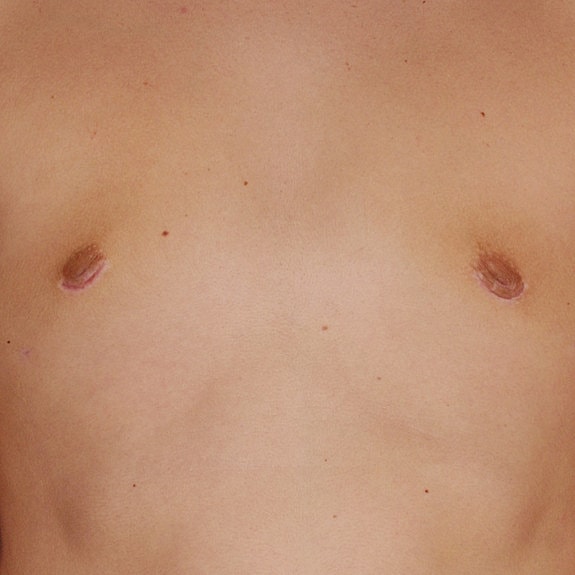
This patient experienced inverted nipples post surgery.
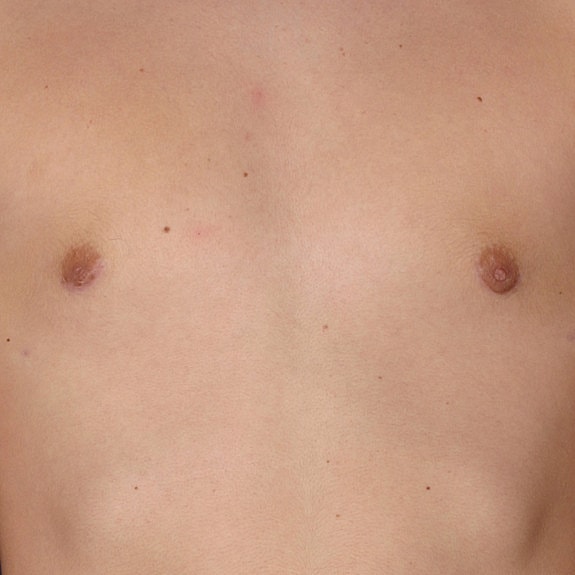
After his last visit, the nipples regained nerve sensation and inverted nipples corrected on their own.
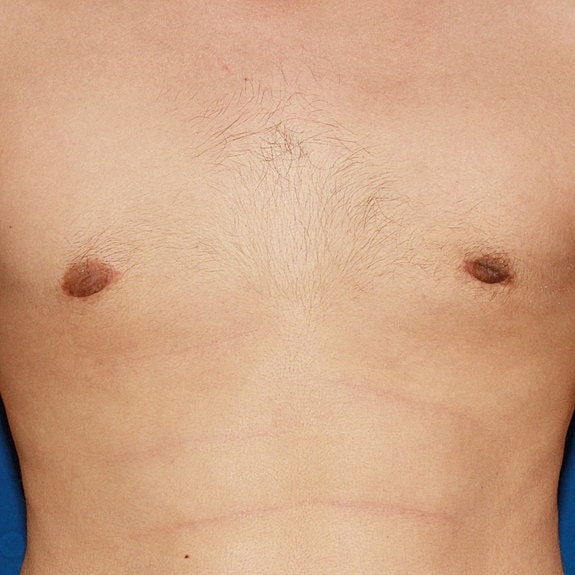
This patient had inverted nipple on the left side only during his healing process.
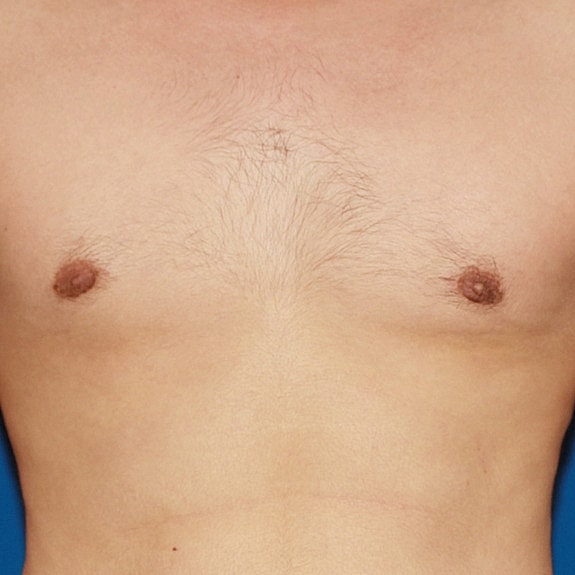
After the internal swelling had decreased and nerve sensation returned, the left nipple was corrected on its own during the healing process.
Many patients may develop a rash after having surgery. This typically happens in the first few weeks following their procedure. A rash can be caused by an allergic reaction to medications, adhesive surgical tape, glue, topical creams, etc.
The first thing you will need to determine is if the rash is caused by an allergic reaction. For example, if you have redness and itching directly around your surgical tape it is most likely an allergic reaction and you will need to discontinue use.
If the rash is on a random area of the body or non-surgical site, it may be an allergy to a medication you are taking or one that you were taking. Allergic reactions often occur even after the offending agent is stopped.
The rash typically will get worse before it gets better. This is particularly concerning as people feel that it should go away immediately. The rash may persist for months and the hyper-pigmentation may last even longer. The good news is that it typically does go away completely.
All rashes should be reported to your doctor immediately. Treatment usually consists of applying a topical steroid and Benedryl.
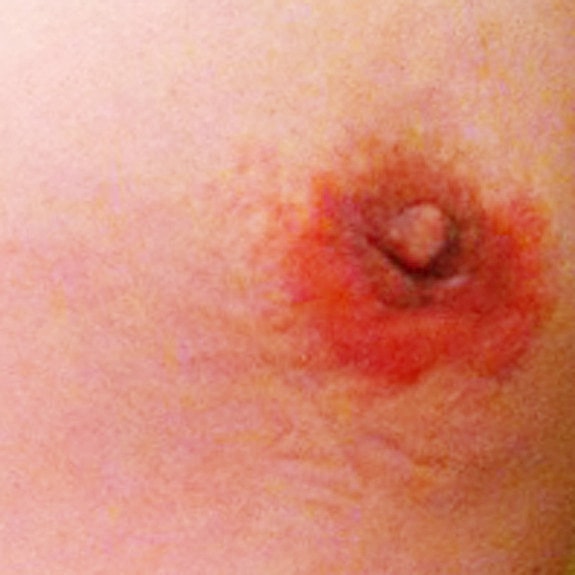
This is an example of an allergic reaction to the surgical tape. Notice the irritation is isolated to the area where the tape was in place.
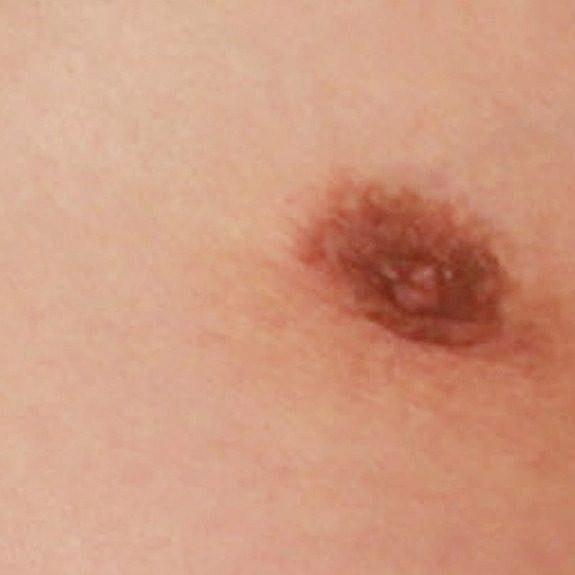
The rash is now gone and incision is still healing right on track. The rash did not have an effect on the final result.
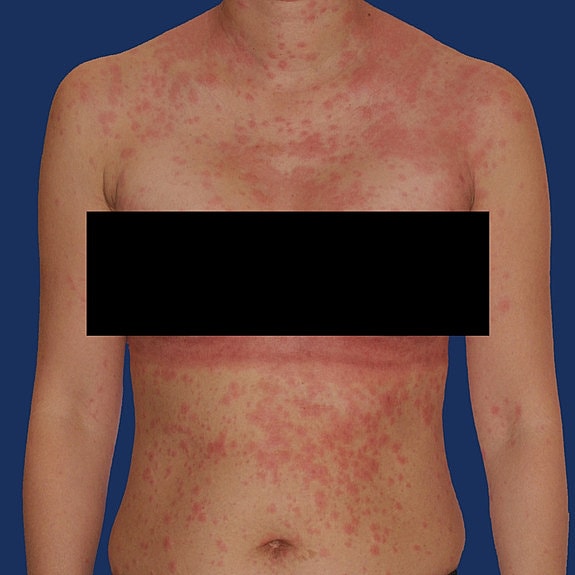
This rash occured 3 weeks post op and was most likely a reaction to medication or cream. Notice the rash is outside the surgical area.
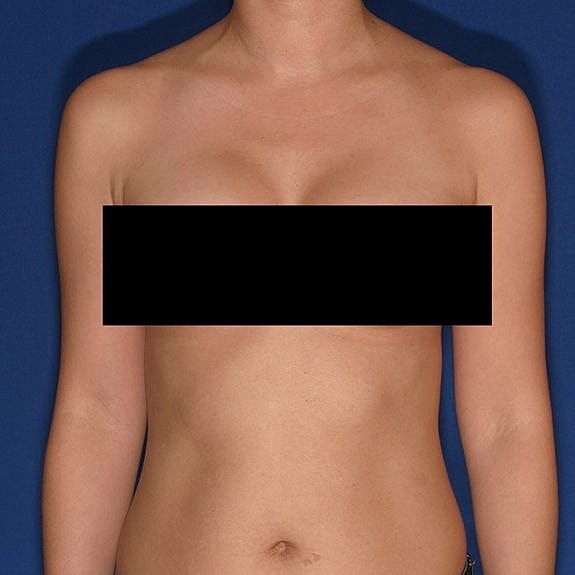
This photo was taken one year after surgery. The rash is not longer present and did not have an affect on the patients final results.
This patient developed a rash around his surgical tape.
This patient was advised to discontinue surgical tape. At 3 month post op rash is no longer present.
A stitch abscess is the body’s reaction to a foreign object. In this case, your body notices a stitch as a foreign body which can occur with both permanent and absorbable sutures. Because your body does not recognize this object it may want to get rid of it and push it towards the surface of the skin to dispose of it.
This is very common in recovery from excess breast tissue removal and does not affect your final results. Stitch abscesses can typically occur within the first 6 months after surgery.
If the stitch abscess is not dispensing any type of discharge or oozing on your surgical tape and it appears to be dry, it is okay to continue taping over it as normal. It will most likely flake off on its own within a few weeks.
If you do notice discharge coming from the stitch abscess, continue taping the entire incision except for that isolated area. You will need to apply a thin layer of Neosporin using a q-tip twice a day and put a band-aid over it. This may take anywhere from a few days to a few weeks to fully subside.
Once there is no more drainage on the bandaid, you may begin to apply surgical tape to the entire incision as before.
A wound breakdown is an opening of the incision in an isolated area that the body is having a difficult time healing. Wound breakdowns usually occur within the first few weeks following surgery. It is important to notify your physician if you are experiencing a wound breakdown, so they can determine if the tissue looks healthy or if additional antibiotics may be needed to speed up the recovery.
If you have a wound breakdown, you will continue taping the entire incision except for this isolated area. You will need to apply Neosporin twice daily using a q-tip and place a large band-aid over it. This may take a few weeks to heal. Once the wound closes, you may notice the pigmentation slightly darker than the rest of the incision. This is normal and will fade out in time.
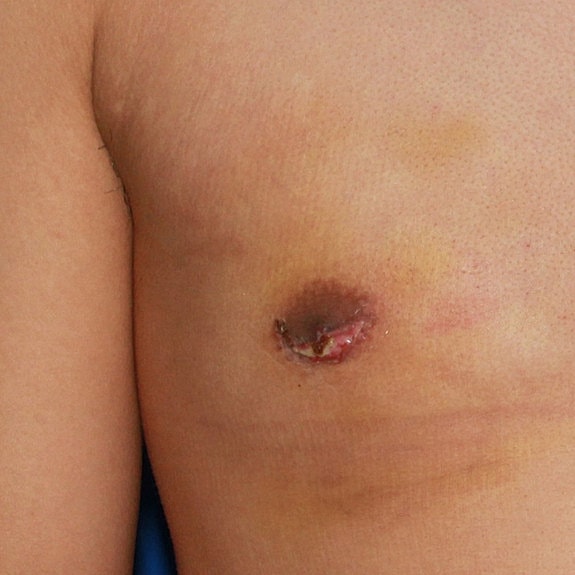
This wound breakdown was first noticed 3 weeks after surgery.
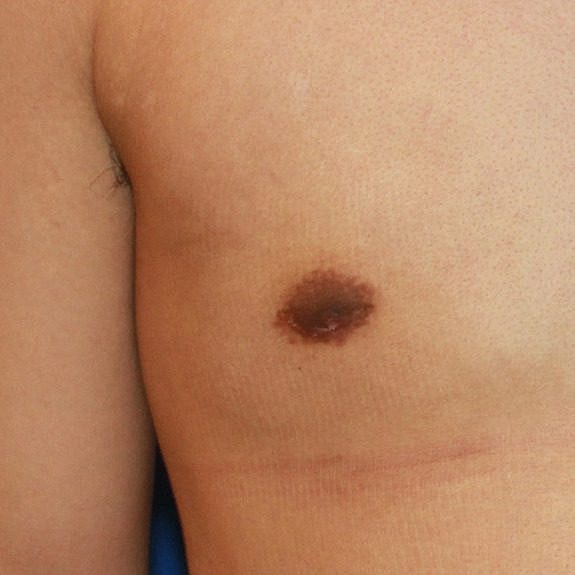
Wound healed by 4 month post op appointment and scar was not affected in his final result.
During surgery, saline solution is used to irrigate the area being operated on. Your body will naturally absorb this solution within the first few weeks following surgery. Sometimes a fluid pocket will form and will not allow the body to properly absorb it. This is known as a seroma.
Seromas are usually very easy to detect. With normal swelling, it will have a spongy feel when tapped with your fingertip. With a seroma, it will have a water wave effect when tapped with your finger.
Although a seroma is not an emergency, notify your doctor’s office promptly since you will need to have your physician aspirate it within 3-5 days of noticing the fluid collection. This does not affect your final results.
Ideally, seromas need to be aspirated by your physician within the first 3-5 days of noticing it. Depending on the patient, the fluid may return and may need to be drained 1-3 times before the seroma is completely healed.
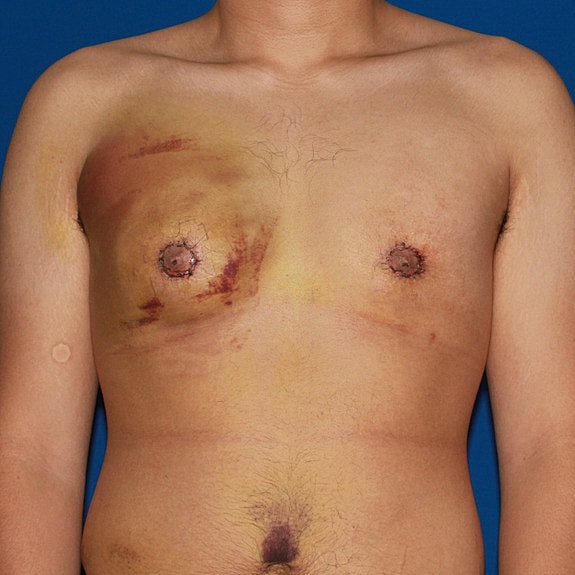
Seroma was first noticed 3 weeks after surgery on right breast. Notice there is circular shape around his right nipple where fluid had collected.
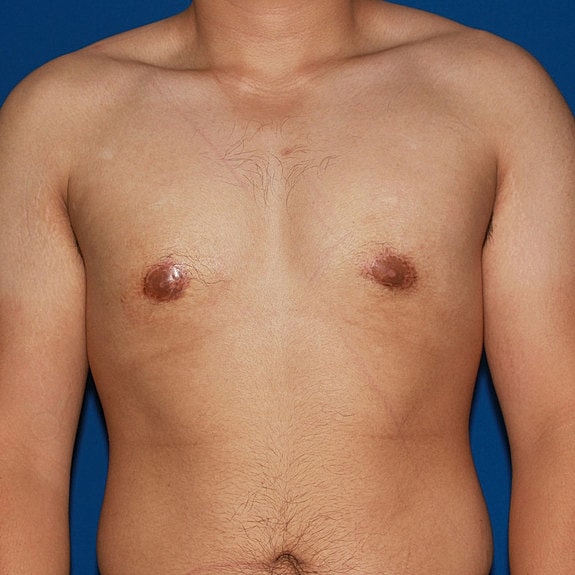
Despite asymmetric swelling and bruising, this patients final results turned out symmetric. The seroma did not affect final results or scars.

A hematoma is a localized collection of blood outside the blood vessels. When a blood vessel is damaged, blood can leak into the surrounding tissue. This blood may coagulate or clot. If you notice any of the symptoms above please contact your physician promptly.
Hematomas must be surgically removed by your physician. If you feel you may have a hematoma please contact your doctor immediately.
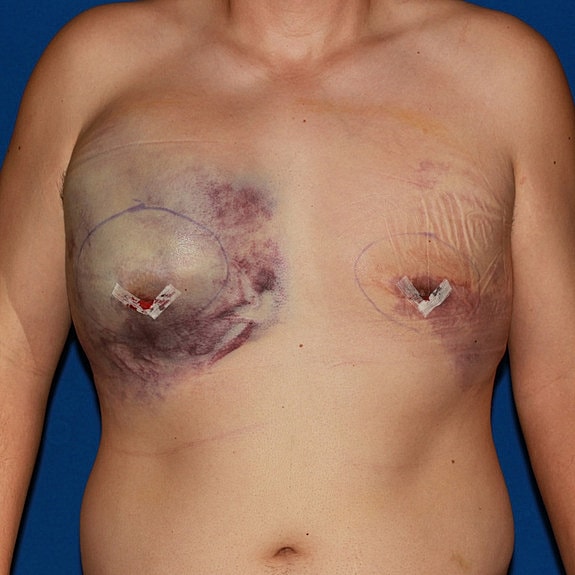
Hematoma occured the night after surgery.
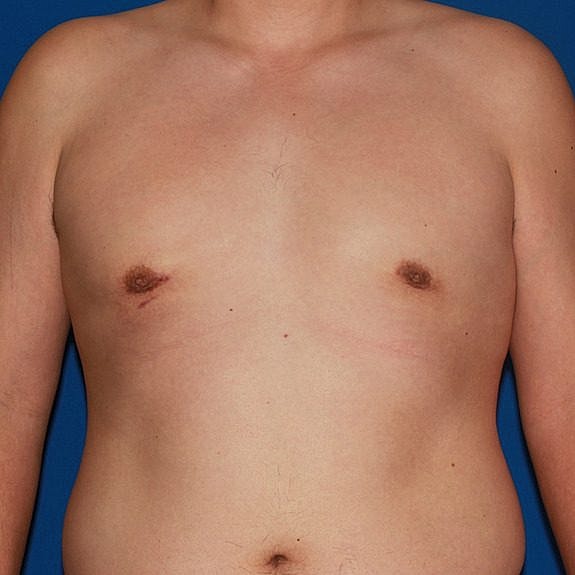
8 weeks after surgery, both sides appea symmetric. Hematoma did not affect final result.
Hematoma occured the night after surgery.
This photo was taken one year post op. The Chest healed smooth and symmetrical.

Constipation is one of the most common things patients may encounter after surgery. We usually recommend taking stool softeners to help, but sometimes patients may require further treatment.
Constipation is caused by the anesthesia in your system after surgery. Most patients are able to have a bowel movement within the first few days after surgery. Those who are unable to make a bowel movement by day 3 should contact their physician for further treatment instructions.
If stool softeners have not worked, the next step would be to drink a glass of prune juice daily until on a normal cycle and take an over-the-counter suppository laxative. Within 24 hours, if you’re still unable to make a bowel movement, repeat instructions. If you are still unable to make a bowel movement by day 5 you need to go to an urgent care.
There is no treatment needed as this is a normal part of the healing process. You may take tylenol for mild discomfort. If you have moderate to severe discomfort you may take your pain medication as directed by Dr. Cruise.
With all scars, they will go through a recovery process. After the wound has closed together, the body will form scar tissue around the area which can turn the scar pink or purple in color. This phase may last a few months before starting to fade away to a skin tone.
You may also notice small bumps along the incision line after the wound closes. This is from both internal and external dissolvable sutures. These can take a few months to fully dissolve, as this happens you will notice the scar starting to flatten.
Scar formation can take up to 1-2 years before the process is fully completed. Dr. Cruise may recommend ScarLess if needed.
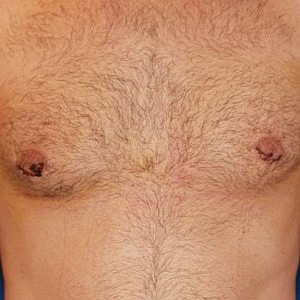
2 weeks Post Op
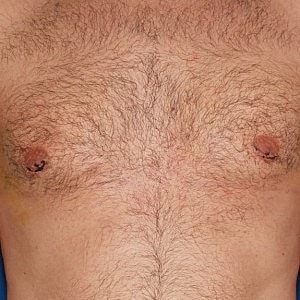
3 weeks Post Op
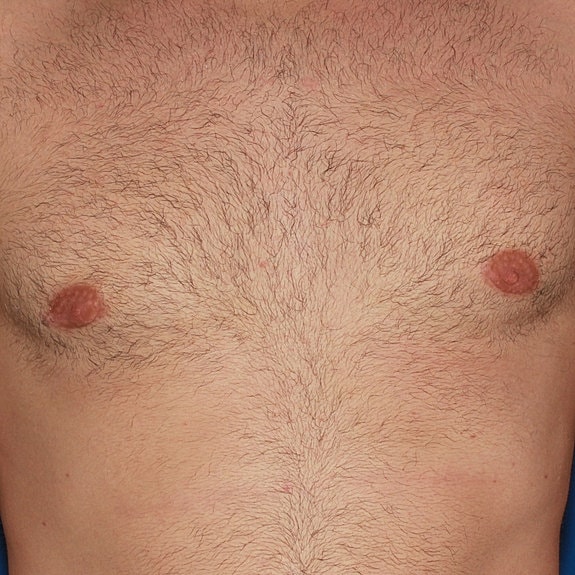
7 weeks Post Op
6 months Post Op
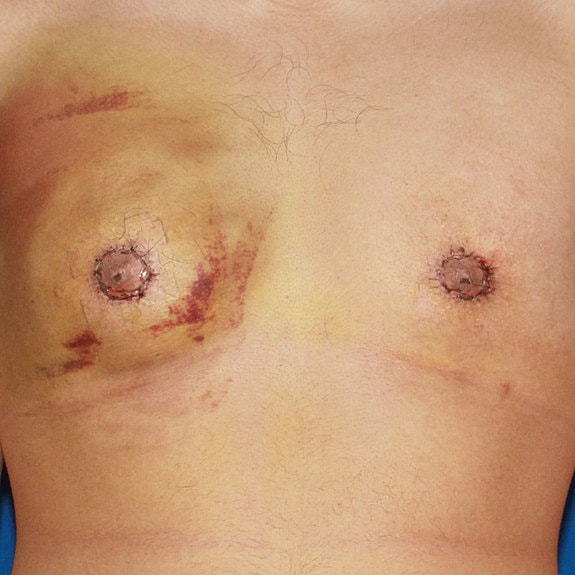
2 weeks Post Op
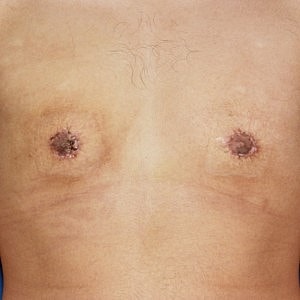
4 weeks Post Op
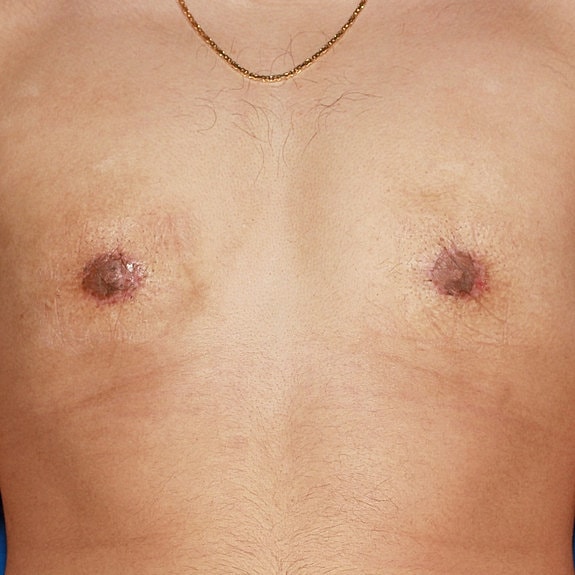
2 months Post Op
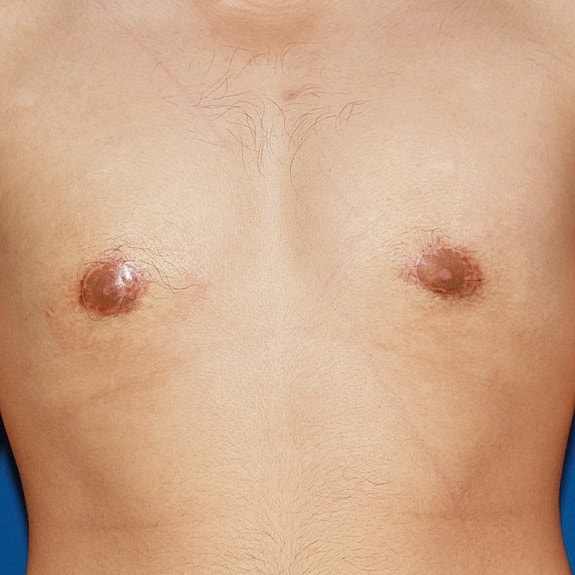
4 months Post Op
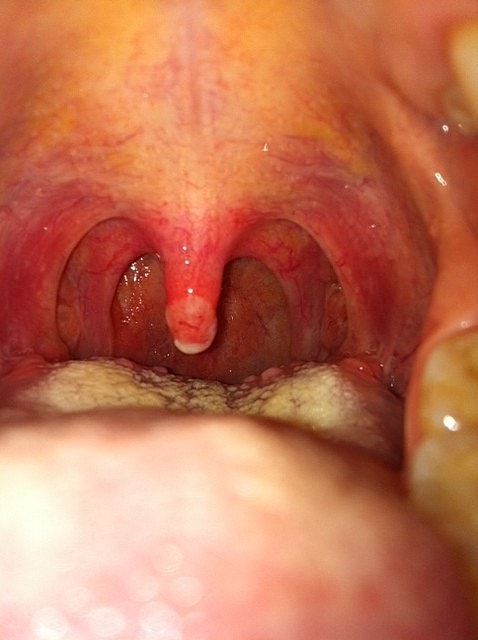
This is an example of a throat irritation after general anesthesia using LMA.
The irritation will typically be at two different levels depending on the type of tube that was put in. For example, our anesthesiologist uses a Laryngeal Mask Airway (LMA) which is really nice because it is like a sponge that rests in the back of the throat. An LMA may cause irritation to the back of the throat (i.e uvula and tonsils).
The other type of tube is an Endotracheal Tube (ET tube). It goes all the way through the vocal cords and into the trachea. This tube can cause vocal cord irritation. This will make it hard to talk.
Always contact your physician to notify them if you are experiencing any of the above symptoms. Throat irritation is usually treated with frozen ice cream/ yogurt along with Chloraseptic Lozenges. Chloraseptic contains phenol which numbs the mouth and throat. It is OTC. Symptoms usually start getting better in as little as 3-10 days after starting treatment.