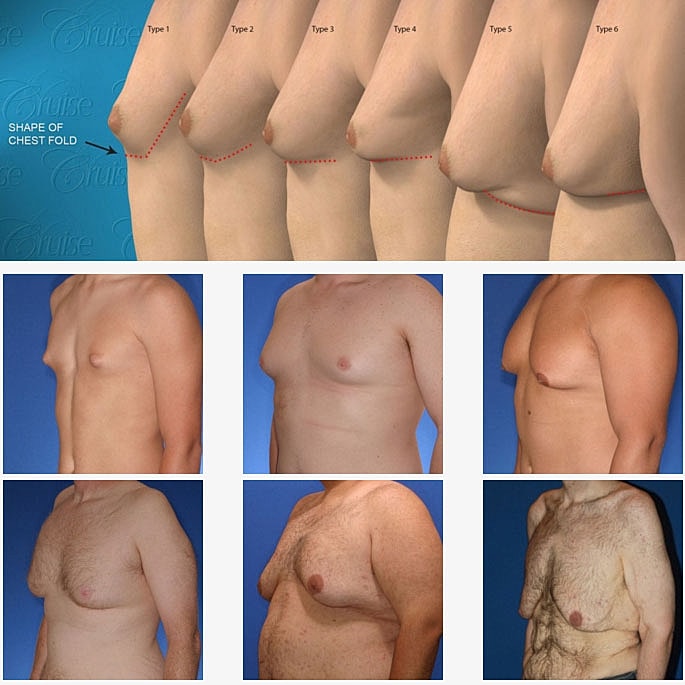



Characterized by severe breast sag and breast tissue which extends into the arm pit and around the back creating a breast roll with back roll.

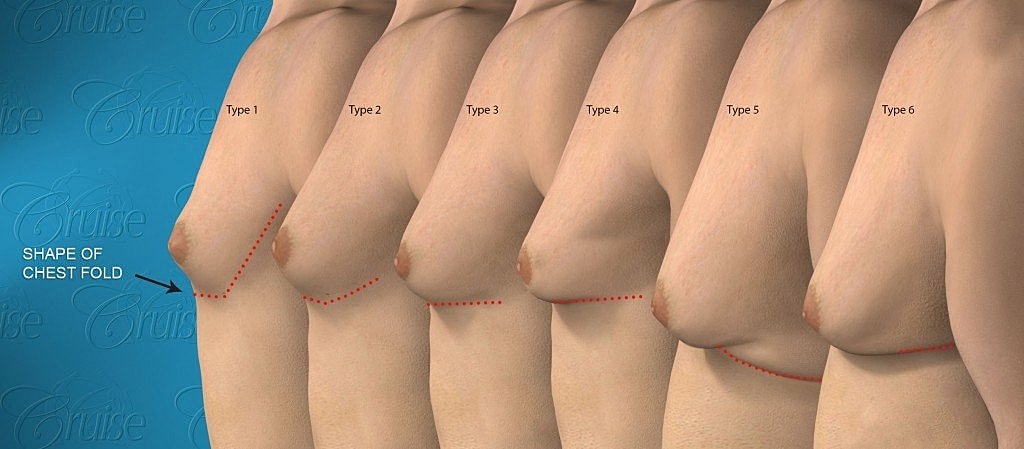
Based on over 2500 gynecomastia surgeries, Dr. Cruise has classified gynecomastia into 6 different types.
Each type is unique in its own way and must be treated differently. The purpose of the Cruise Classification System is to:

A classification system is only useful if it outlines a treatment plan.
Dr. Cruise
Notice the progressive increase in skin laxity. This excess skin will change the type of surgery necessary to properly correct the problem.
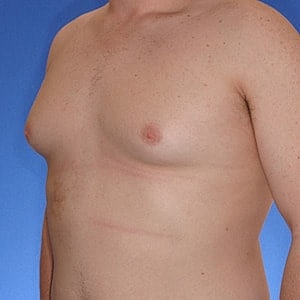
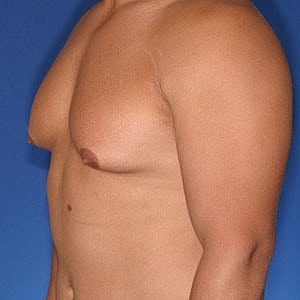
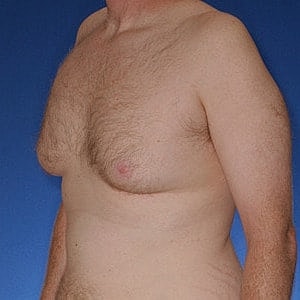
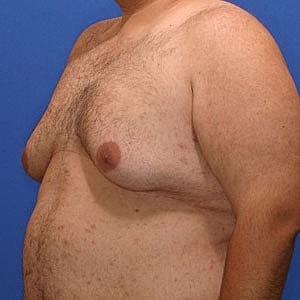
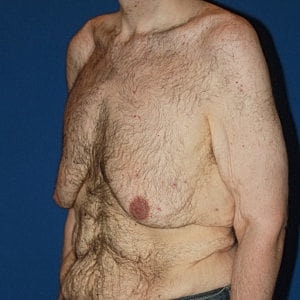
Type 6 Gynecomastia, by definition, has so much excess skin that it creates a breast roll that extend onto the back creating a “back roll”.
Like type 5 there is usually excess skin in “two directions”. (See type 5). Proper treatment requires addressing both the excess tissue and excess skin in all directions. This is necessary to not only create a defined chest and sculpted arm pit, but to create a long term V shape to the upper body.
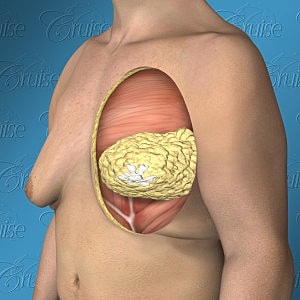

Unfortunately, the clinical definition for optimal results is virtually non-existent; even in plastic surgery literature. This is why it was essential for Dr. Cruise to include it as part of the Cruise Classification System. A classification system is only useful if it identifies where you are and where you need to go.
The first part of the classification system identifies 6 basic types based on where you are. This next part of the system identifies where you need to go. It is true, different men have different goals. However, with Type 6 patients it is critical to achieve the absolute best long term result possible. Dr. Cruise’s has identified eight fundamental aspects of the male upper chest that need to be evaluated in order to achieve a masculine chest. These eight are outlined below.
Type 6 patients need to address all eight components. All of them are critical to achieve optimal results. With Type 6 it takes considerable planning and experience combined with dramatic skin removal and re-positioning. However, the upside is equally as dramatic. By the time you get to Type 6, minimizing incisions has gone out the window. However, with Dr. Cruise, making them fade away has not. As hard as it may be to believe, the goal is still to allow you to comfortably take your shirt off in public. Incisions get better every day but skin sag only keeps getting worse. With this in mind, chest shape and tight skin is critical. Proper evaluation and treatment of components 4-7 are essential to achieve a sculpted arm pit or even seeing the outline of your pec. major and lat. dorsi. This, however, is what the art of gynecomastia surgery is all about. Meticulously evaluating and addressing these components is what separates you from over-sized to fitted shirts. Determining your goals while addressing these components is what determines your surgical road map.
“Achieving optimal results and avoiding complications requires both expertise and a plan”
Dr. Cruise
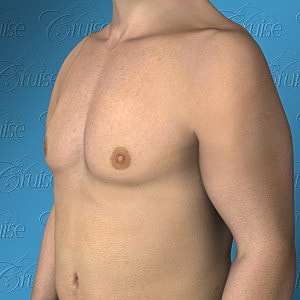
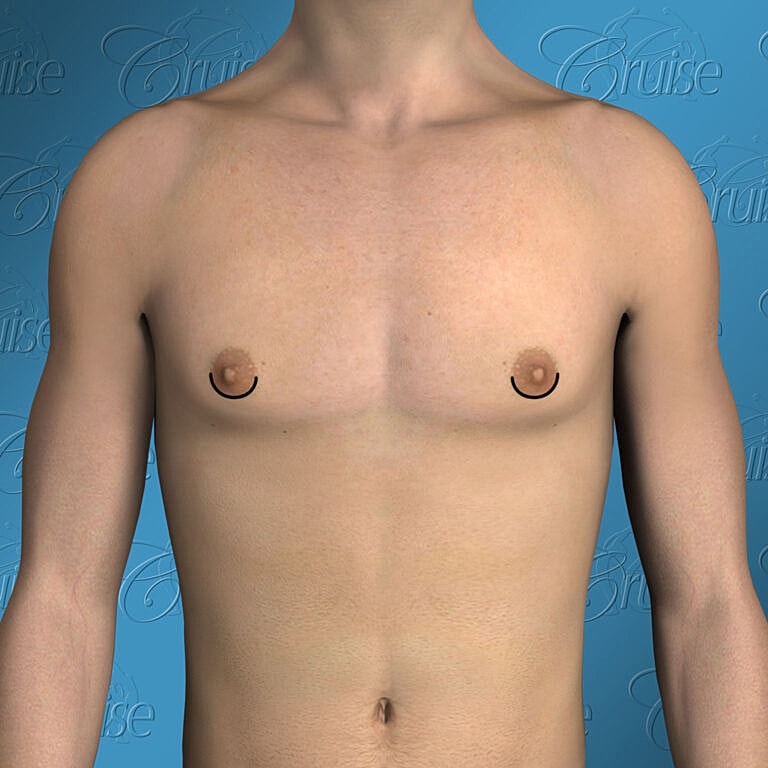
External view of masculine chest
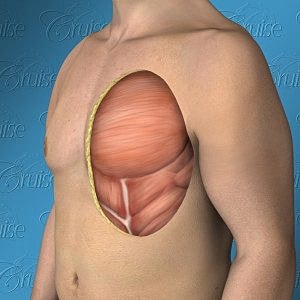
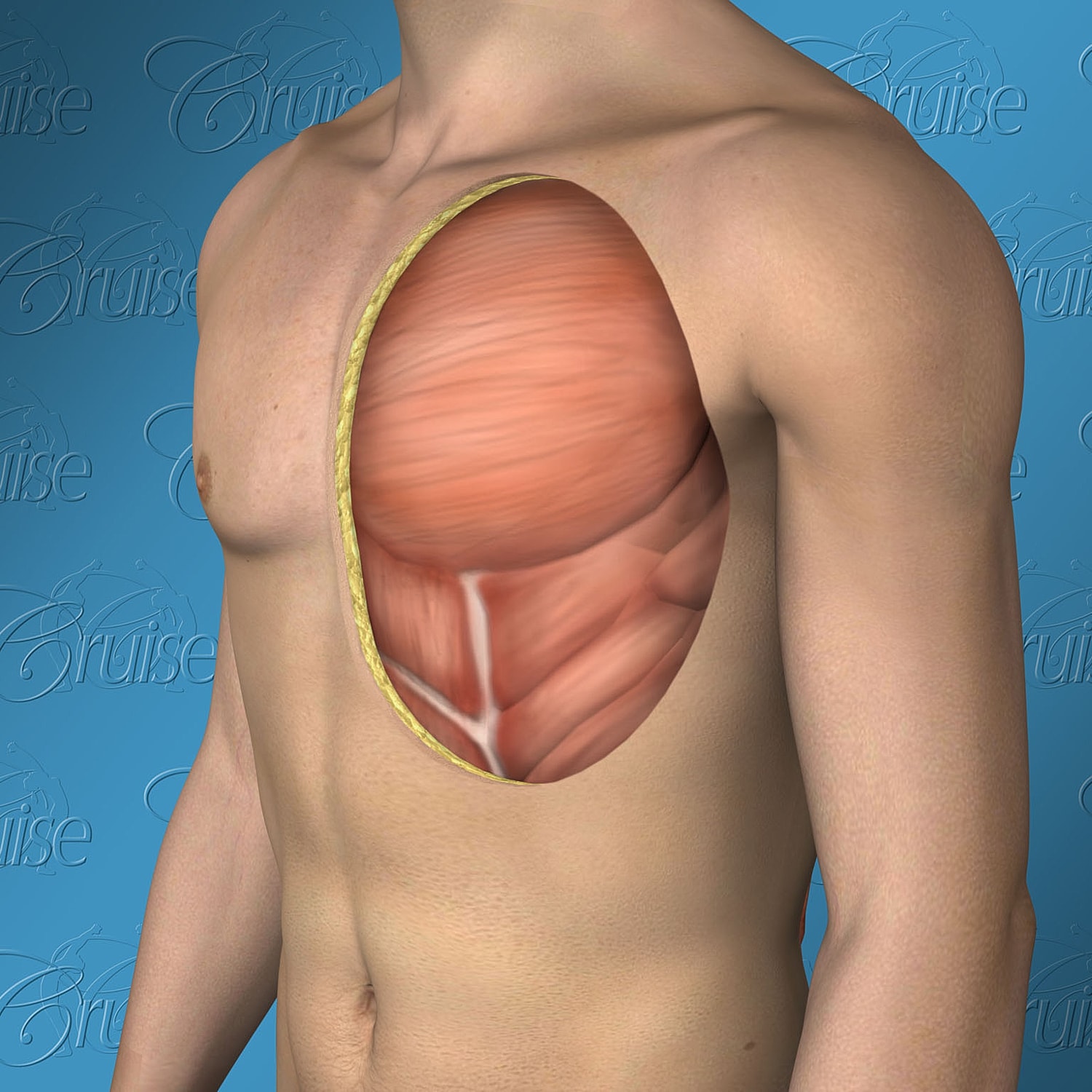
Internal view of masculine chest
The Cruise classification accurately defines “where you are”. Now, we need to clearly define in surgical terms “where you want to go.”
With this is mind, we asked Dr. Cruise to outline the most important aspects that need to be addressed when surgically treating gynecomastia and what they should ideally look like.
Overall, a masculine chest is full and powerful above the nipple but ripped and defined below. The key is to create muscle definition, flatten the nipple, yet keep the chest area above the areola normal thickness. Thinning too much will create a “fragile” appearance and worse, may create contour irregularities. The goal is to flatten the chest so that you can confidently wear tight white T-shirts and to create a V shape from both the back and front view.
While most gynecomastia patients are looking for a “flat” chest what they really mean is they want a masculine chest. There is a difference. Overall, a masculine chest is flat with a defined pec. major muscle. The upper chest should remain full and powerful. The goal is to create a sculpted look by getting the nipple to lay flat against the pec. major muscle and by getting the the skin to wrap around the border of the muscle into a sculpted axilla.
The areola is the dark, pigmented skin around the nipple. Areola size is proportionate to chest size. Ideally, it should 25-35 mm and lay flush with the surrounding skin. However, slight elevation is common. Most people do not consciously realize it but areolas are usually wider than they are tall. A perfectly round areola is not ideal and an areola that is taller than it is wide may even appear unusual or “surgical”. This is particularly relevant with Types 4, 5 and 6 which usually require reducing and re-positioning the nipple with a free nipple graft. A protruding nipple is common with puffy nipple due to the pressure from the swollen breast tissue below. However, there are situations where the nipple is simply enlarged. Fortunately, reducing the nipple by excision is straight forward, low cost, little down time and very effective.
Ideally, the pectoralis major muscle should be defined and straight with the skin wrapping around it into a well defined chest fold and then into a defined arm pit hollow. Excess breast tissue, fat and/or saggy skin will blur this border and create a round, feminine appearance.
Should have sculpted appearance with a well define hollow at its apex. The borders of the pec. major in front and the latissimus dorsi in back should be well defined giving a V shape to the upper body. Excess fat/saggy skin can fill the arm pit creating an uncomfortable fullness in armpit and a saggy breast roll just below. For types 5 and 6’s, this is often as big of a concern as the chest. Creating a sculpted axilla and a V shape appearance to the upper body is one of the most rewarding parts of gynecomastia surgery yet it is usually overlooked as not being part of the gynecomastia. It is important for your surgeon to understand that the goal of surgery is to create a V shaped, masculine chest and not just to remove breast tissue. While this is true for all types it is particularly relevant for types 4,5 and 6. I can not tell you have powerful the results are when you create a sculpted pec., lat. and arm pit. It is truly life changing.
Ideally, there should not be any fat pockets. There are three common fat pockets that need to be evaluated and removed if present:
Should not be present. Lateral chest/arm pit skin should be tight enough to prevent breast rolls, create a defined pec. border and lat. border with a sculpted arm pit in between. Breast rolls represent saggy skin under the arm pit. Flattening the chest and not correcting breast rolls actually makes the breast rolls more noticeable and creates a disproportionate look to the upper body.
Should not be present. They represent saggy skin that goes all the way around to the back. Optimal surgical treatment requires removing all the excess skin in a 360 degree fashion. Often seen with massive weight loss patients.
Below find Dr. Cruise’s preferred incision placement for effectively treating Type 6 Gynecomastia.
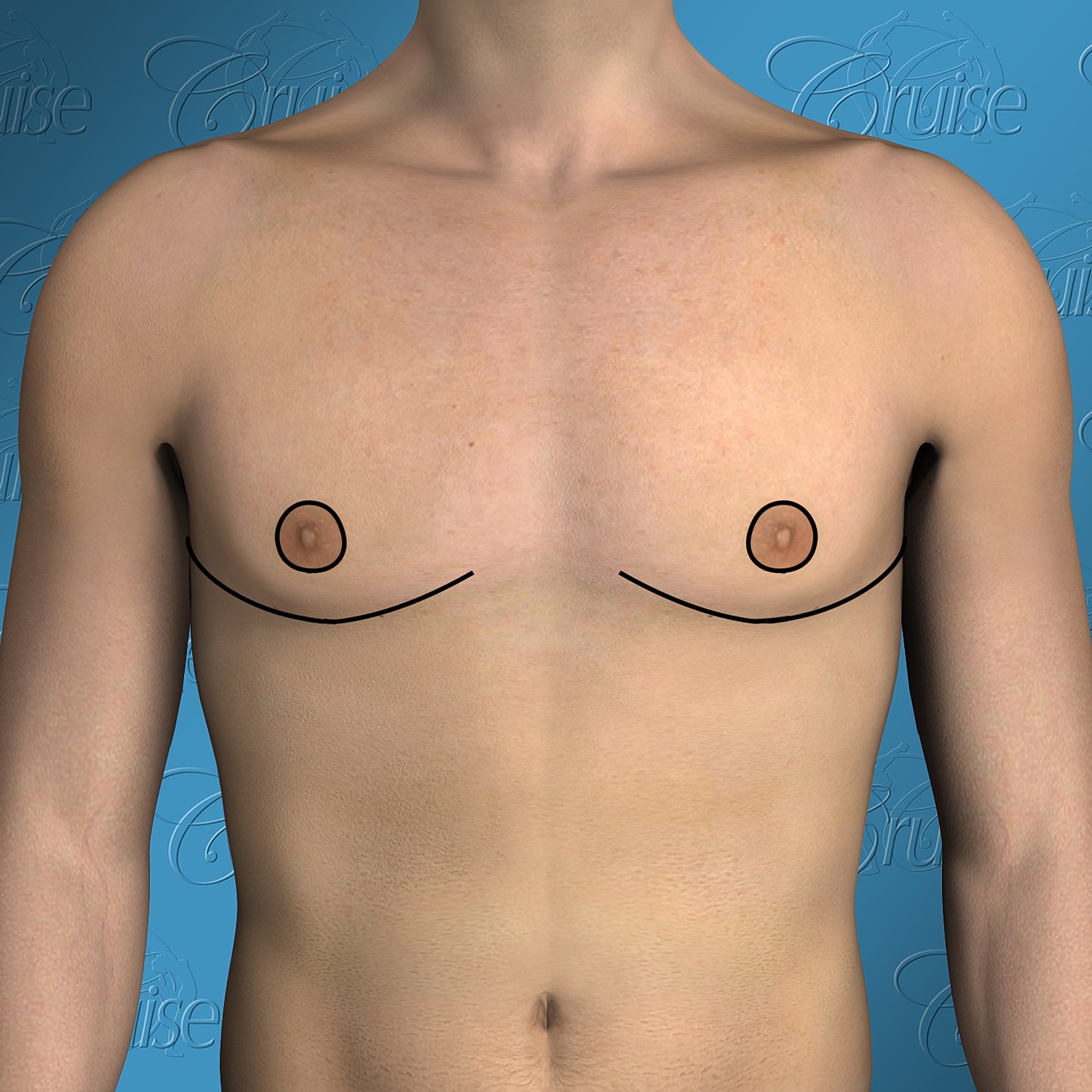
Chest lift with nipple re-positioning (pedicle) or free nipple graft. Incision is positioned strategically within the natural chest fold. Type 6 Gynecomastia patients have massive amounts of excess skin in multiple directions. Optimal correction requires removing all the excess skin and re-positioning the nipple on top of the pec. major muscle where it belongs.
The incisions on the chest are similar to the Type 5 chest lift. The circular nipple/areola incision routinely heals exceptionally well because it is not under tension. The chest fold incision is well hidden in the chest fold before it circles around to the back. This is the incision that takes the longest to fade; usually 1-2 years. This incision may go completely around the back or it may end over the scapula depending on if there is excess skin in the mid-line back.
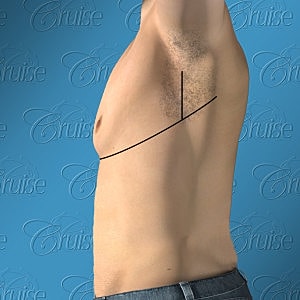
This Shows the extended incision rising in straight line across the axilla onto the back. Arm pit incision represents axillary. This bi-directional incision arrangement allows skin tightening in all directions. The axillary pleat is an amazing addition to both Type 5 and 6’s. It tightens the skin horizontally creating a sculpted arm pit, a defined pec. major and lat. dorsi as well as creating a V-shape to the back.
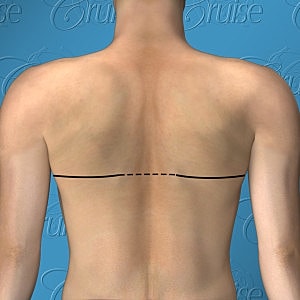
Incision goes as far a the back roll goes. This may or may not require a circumferential incision (This is represented by dotted line.)
In short, for the vast majority of patients, the Nipple Re-Positioning or Free Nipple Graft is a significantly better procedure than the traditional Anchor Lift. The 4 main reasons are;
The only reason why the anchor lift is common in traditional gynecomastia surgery is because it is the most common procedure in female breast lifts. However, men and women are different. I know this seems almost comical but it has to be explained. The anchor lift is a great procedure when the goal is to create a perky, conical breast. I use it all the time on my female breast lifts – but never for men. The last thing I want to accomplish is a perky, conical chest on my gynecomastia patients. I switched over to the Nipple Re-Positining/Free Nipple Graft 10 years and several thousand gynecomastia patients ago and have never looked back. I did it originally to avoid the unsightly vertical scar (ironically this vertical scar heals extremely well in women but not with men because of incisional tension reasons.) I did not expect to find that not only did the Nipple Re-positioning/FNG method avoid the vertical incision; it made the incision around the areola virtually unnoticeable with time. Again, the reason is because there is no tension.
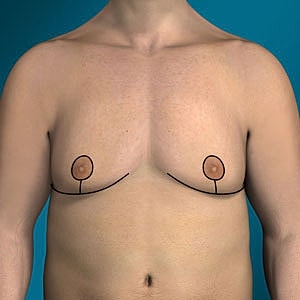
No vertical incision from areola to breast fold
Notice the persistent breast fullness as well as skin sag that can not be corrected as well as with free nipple graft.
Notice that those incisions will typically provide a tighter and flatter chest than anchor lift with better scarring.
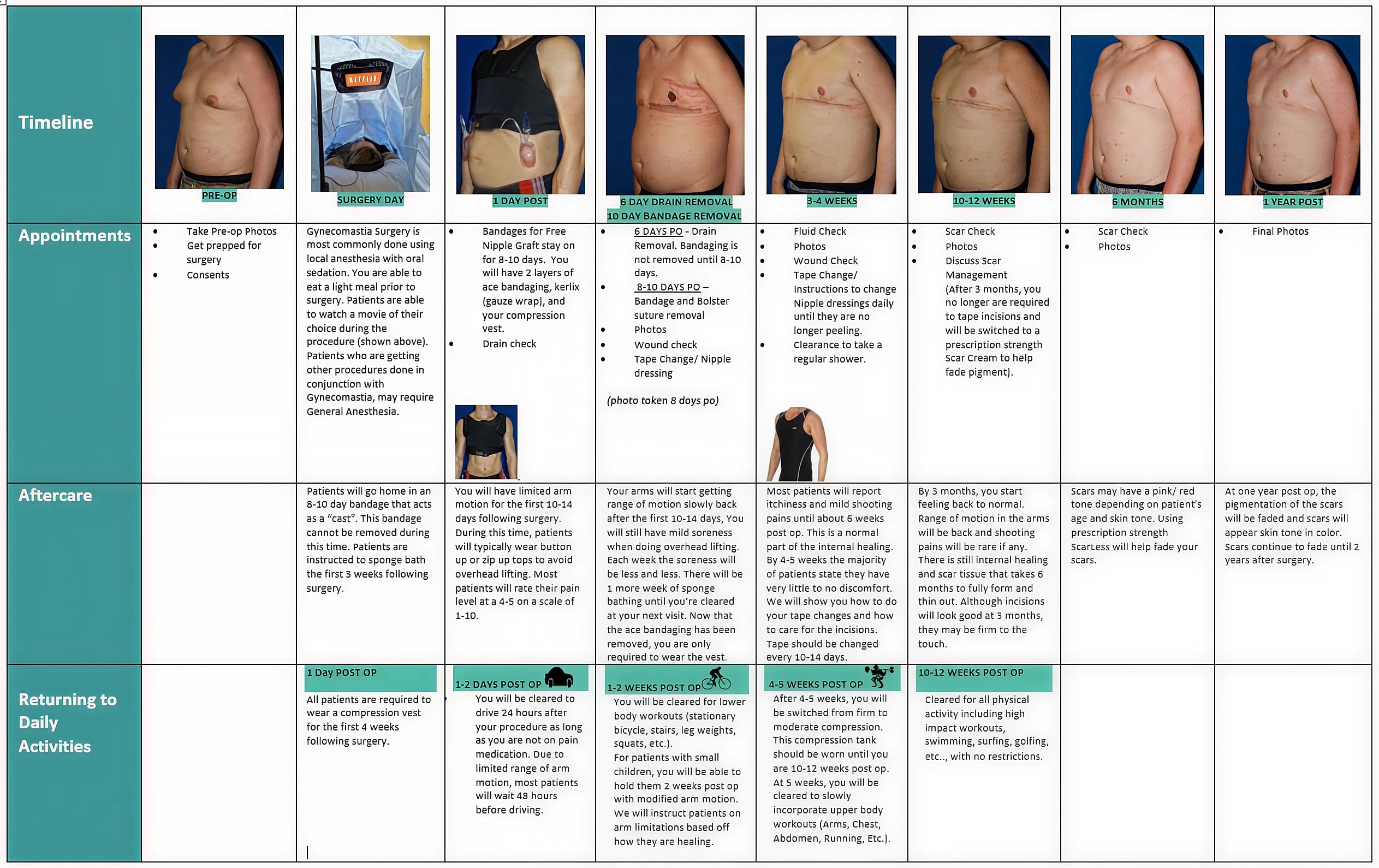
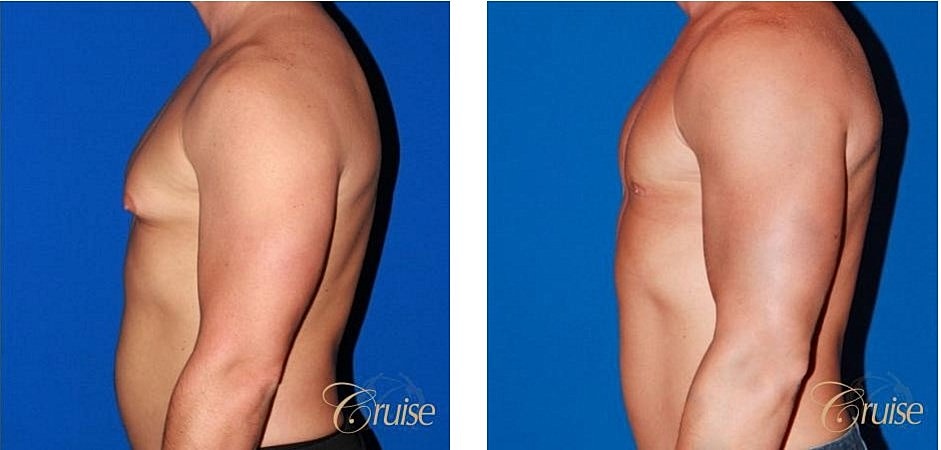
View before and after photos to see the results of Type 6 Gynecomastia. Remember, each patient is unique and results will vary from patient to patient.
1 of 2
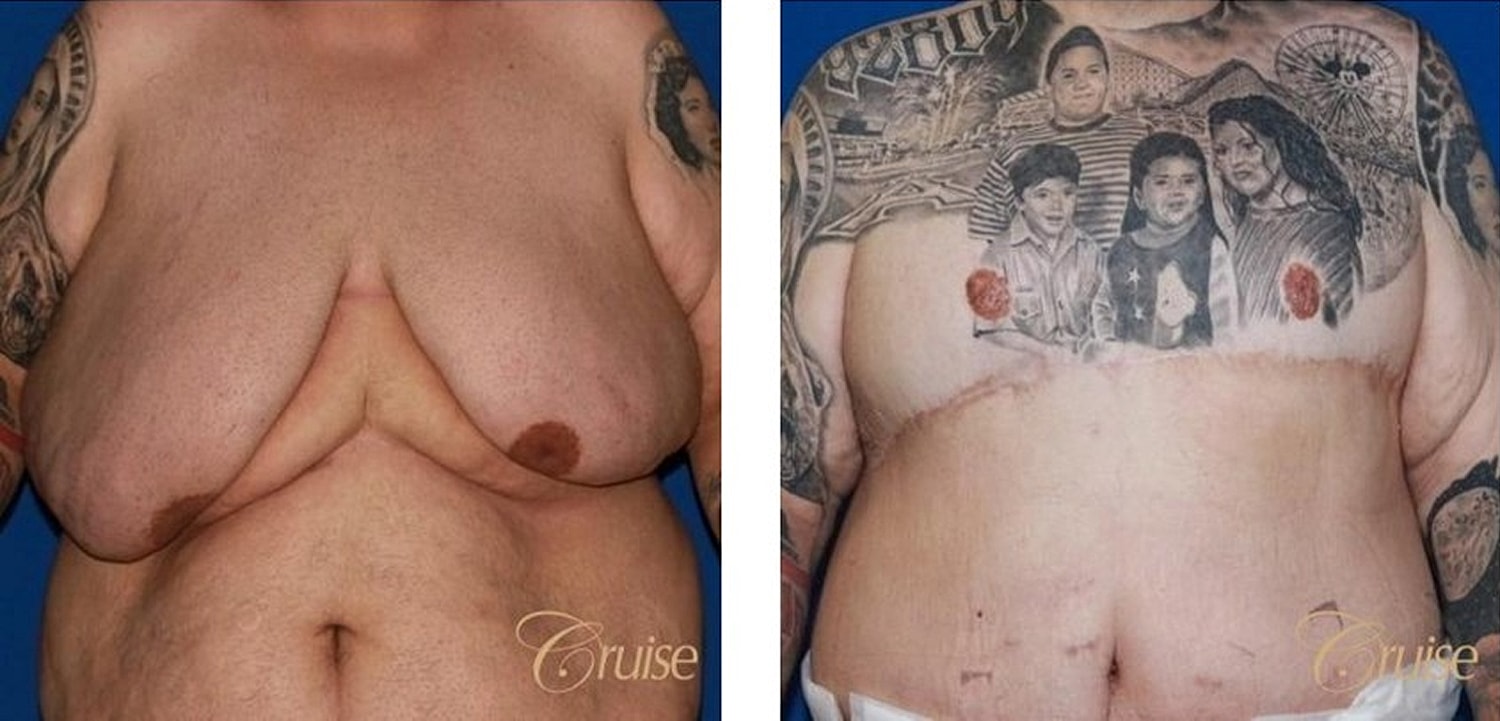
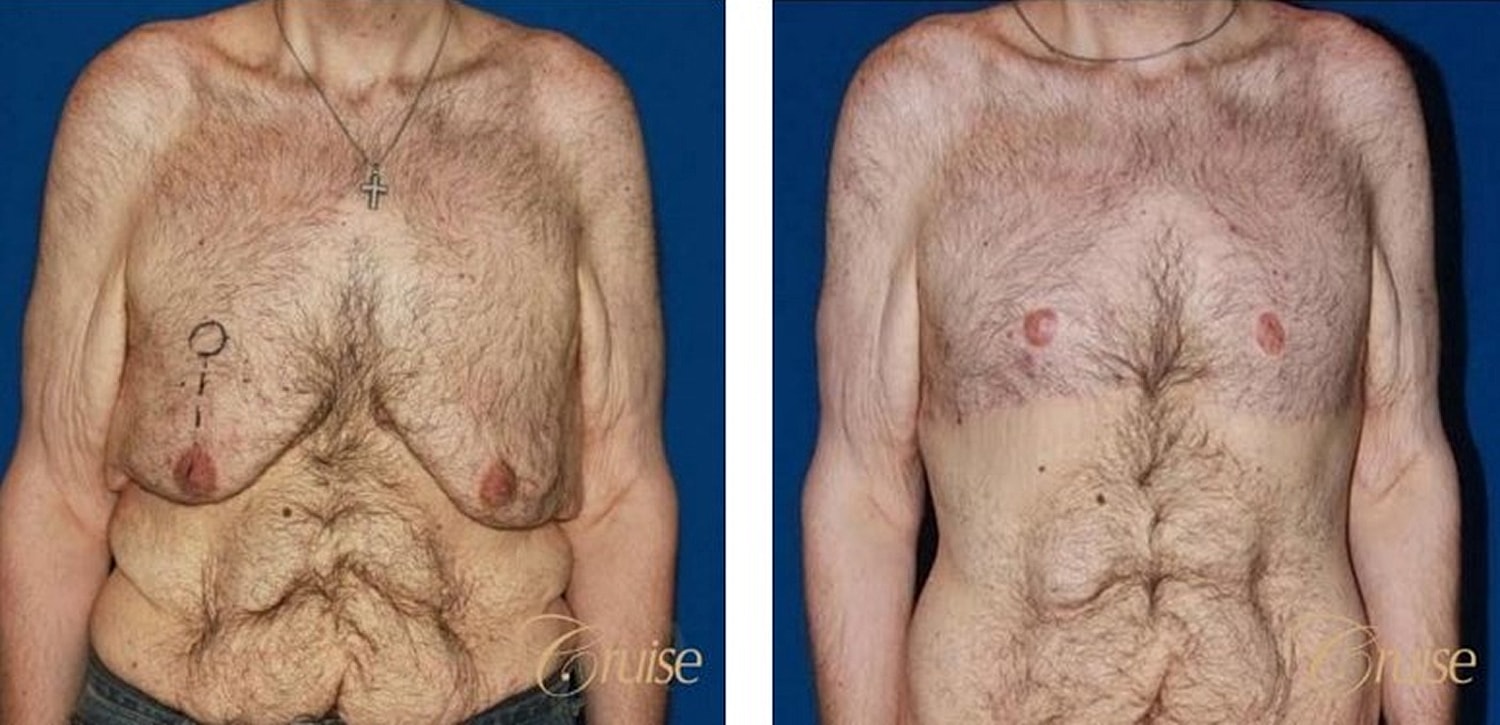
The pain and suffering associated with gynecomastia is unlike any other condition in plastic surgery and perhaps in all of medicine. The range of its impact is stunning. Some men (usually older) can be relatively unaffected while others (usually the younger) can be completely devastated and even suicidal.
Unfortunately, because of the stigma associated with it, it is not always readily apparent what your loved one may be experiencing. In fact, the men or more commonly pubescent teenagers, who are most deeply affected go to great lengths to suffer alone. The Internet becomes the only one they can talk to. This dangerous combination of deep emotional pain and isolation makes them particularly vulnerable to exploitation. Exploitation that takes the form of the literally thousands of “miracle” cures that have no medical merit to the more nefarious types looking to take advantage of the the emotionally weak.
Wide spectrum of outward expression from normal to:

Call our office today, 949-644-4808, or fill out our online contact form to learn more about gynecomastia and what your surgical options are. Dr. Cruise has performed over 5,000 gynecomastia surgeries and is ready to meet you for a consultation.