




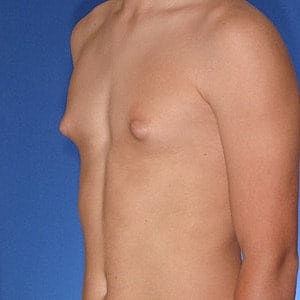
Characterized by a bulging, shiny areola and an over-projecting nipple.


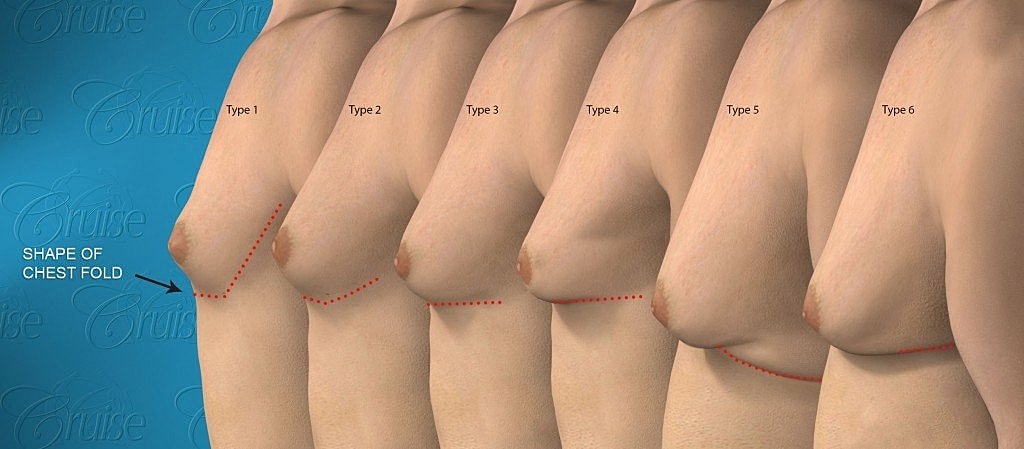
Based on over 2500 gynecomastia surgeries, Dr. Cruise has classified gynecomastia into 6 different types.
Each type is unique in its own way and must be treated differently. The purpose of the Cruise Classification System is to:

A classification system is only useful if it outlines a treatment plan.
Dr. Cruise
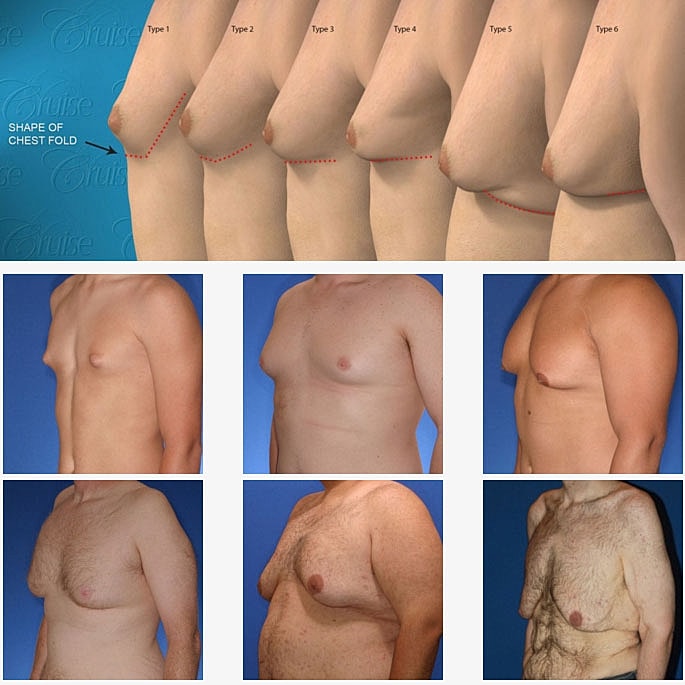
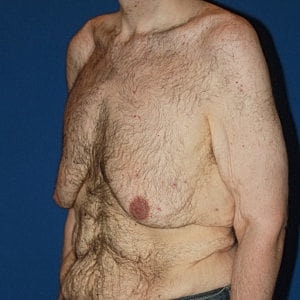
Notice the progressive increase in skin laxity. This excess skin will change the type of surgery necessary to properly correct the problem.
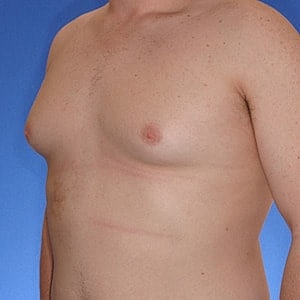
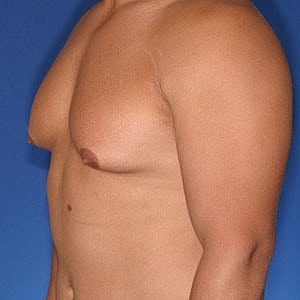
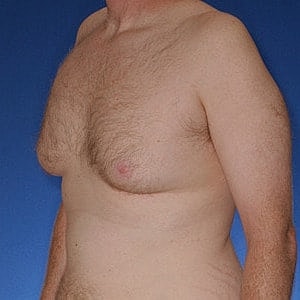
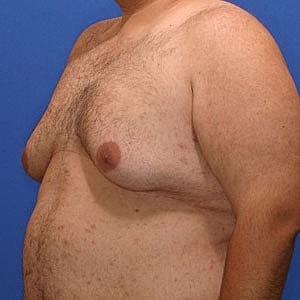
Type 1 gynecomastia, often known as puffy nipples, is the mildest form of the condition. In these cases, the excess tissue is located primarily beneath the nipple and areola, with little to no spread across the rest of the chest.
Because the surrounding skin remains firm and tight, it wraps cleanly around the pectoral border, maintaining a more defined and straight chest contour. Unlike more advanced types, Type 1 does not involve significant fat or glandular tissue extending beyond the nipple area. This is what differentiates it from Type 2 gynecomastia, where the tissue pushes past the pectoral edge, often leading to a rounder, less defined chest fold. Some individuals with Type 1 may also notice mild tenderness in the area, a common symptom when glandular tissue is present beneath the surface.
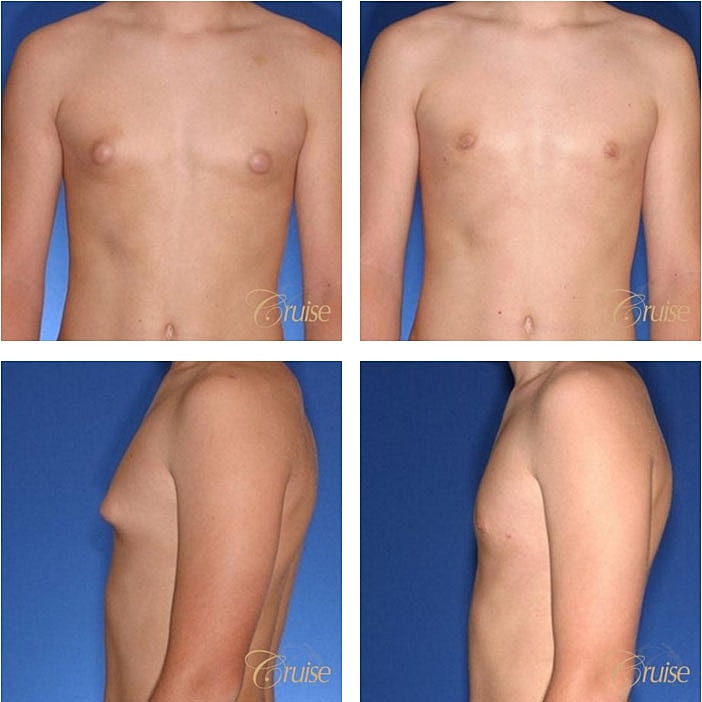
Characterized by puffy nipples. Patients are typically young, thin with a straight, well-defined pectoralis muscle
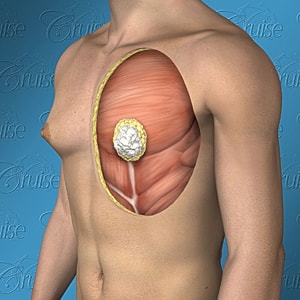
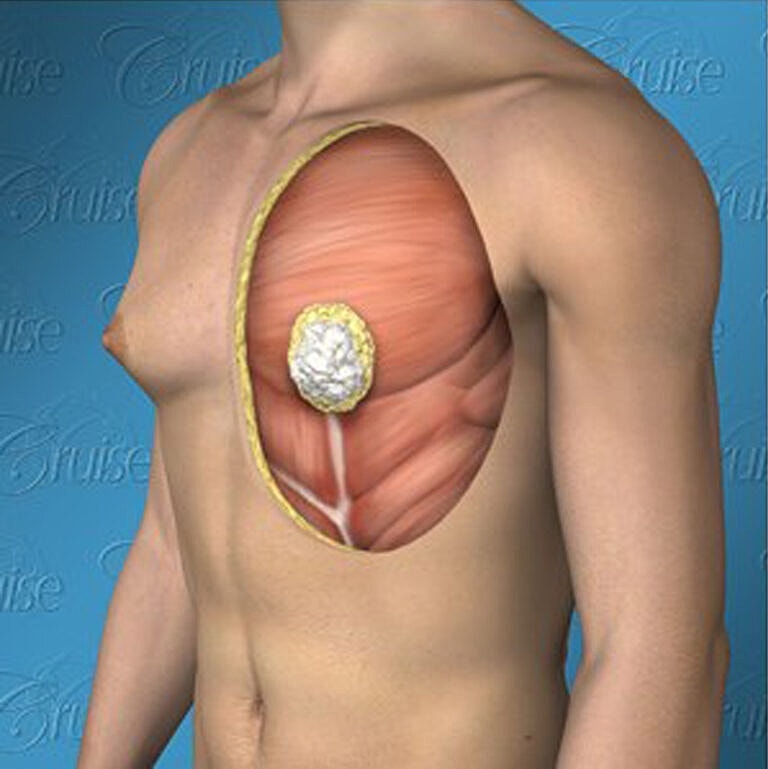
Notice the firm, white, breast glands located almost exclusively underneath the nipple/areola. This excess fatty tissue is what creates puffy nipples.
Unfortunately, the clinical definition for optimal results for gynecomastia is virtually non-existent; even in plastic surgery literature. Type 1 does not necessarily mean easiest to treat, although it is defined as the most mild amount of breast tissue growth.
In fact, puffy nipple patients are very particular and do not tolerate delicate complications such as persistent puffy nipple, cratering, contour irregularities, etc. Type 1 patients are typically in very good physical shape to begin with. While puffy nipple is the major concern, there are many other aspects of Type 1 male breast growth that absolutely need to be addressed in order to not only achieve an optimal result but, more importantly, avoid complications.
The most common cause of poor outcomes is not having this plan. Unfortunately, gynecomastia treatment has never been given the same attention that most other plastic surgery procedures. This over-sight is the reason for this site. To create the fertile infrastructure to allow both patients and surgeons to communicate their experience. To exchange ideas and show not only what works but also what doesn’t.
“Achieving optimal results and avoiding complications requires both expertise and a plan”
Dr. Cruise
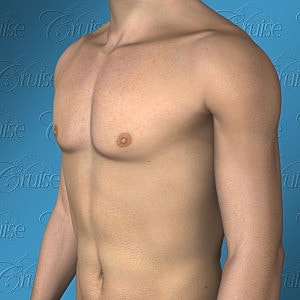
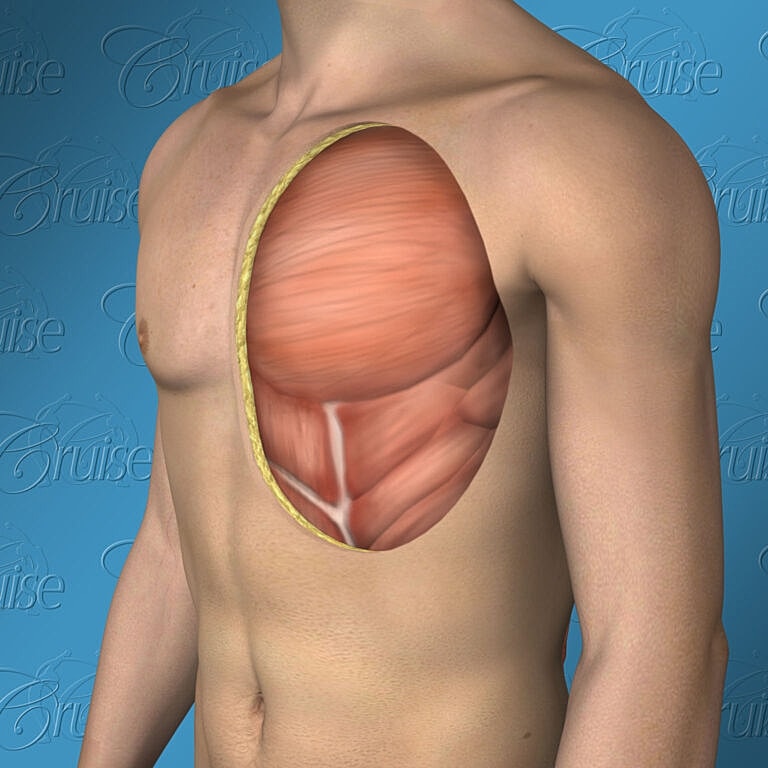
External view of masculine chest
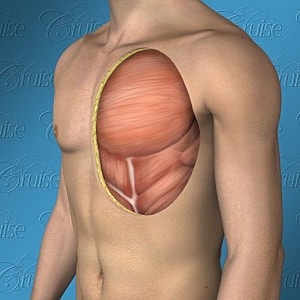
Internal view of masculine chest
This question is actually very difficult to answer from a medical perspective. Compared to other medical conditions, clinically relevant information is not available for treating breast gland tissue in one or both breasts. This ignorance is unacceptable particularly because it has such a significant impact on so many men’s lives. Even plastic surgeons who diagnose gynecomastia are often vague as to what is the best way to evaluate and treat it.
To simplify this, Dr. Cruise outlines the 8 areas of the upper body that need to be considered to provide a surgical road map that will predictably achieve your optimal results.

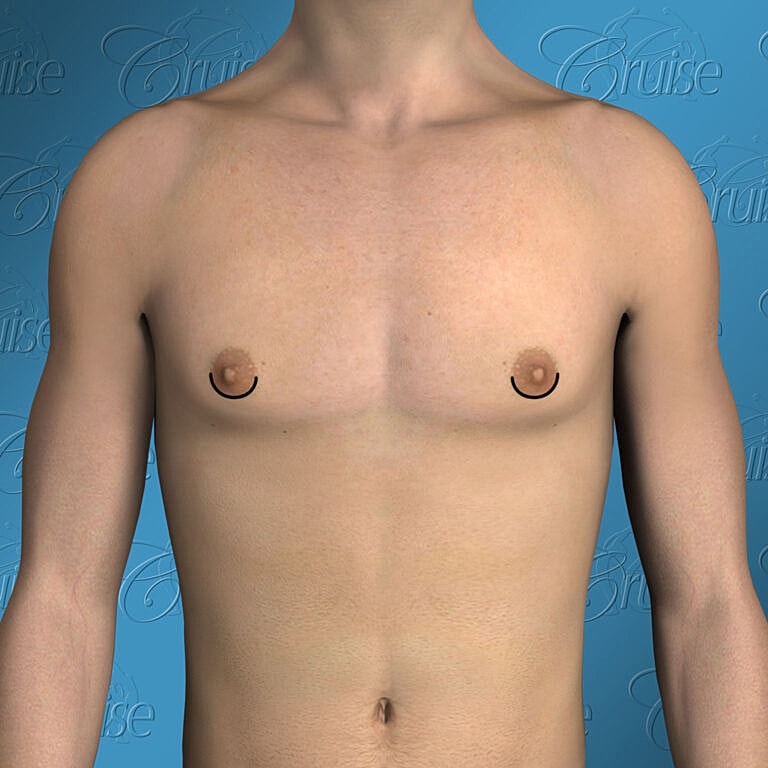
Incision visibility is less of an issue when the gynecomastia diagnosed is mild Type 1 Gynecomastia compared to the other types. This is because even the most aggressive incision (the superior crescent) still remains within the “forgiving” areola compared to the less-forgiving non-areola skin. Puffy nipple surgical results typically leave no visible scarring.
Type 1 patients do not have much to worry about extra incisions as their skin is already tight. Their incision will be limited to around the areola. There are some Type 1s that have very low nipples. In these patients, nipple elevation is usually required to prevent the nipple from “falling off the pectoralis border.” If this happens, the nipple falls into the chest fold and it looks like it is “cratered.” Clearly, not desirable. This requires a superior areola incision which is slightly more visible but still not an issue.
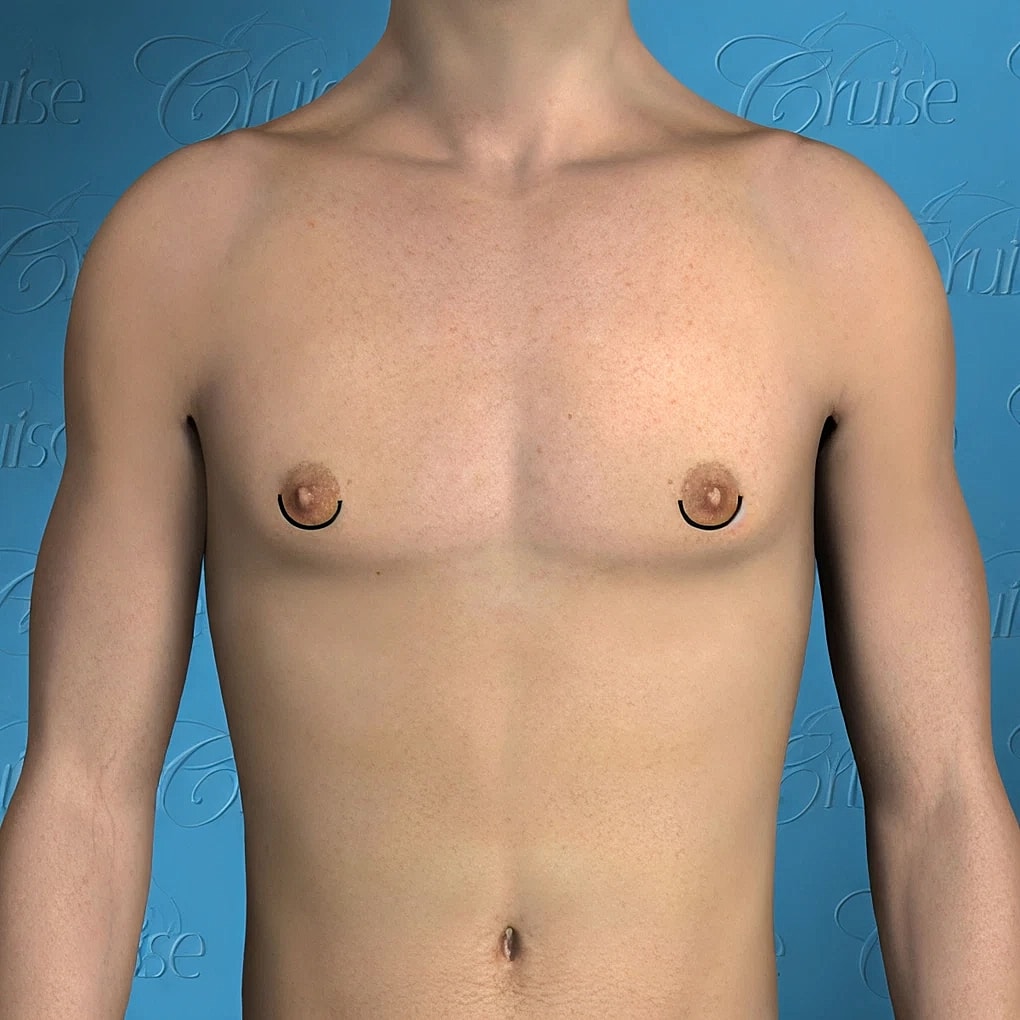
An inferior crescent excision involves removing a narrow, crescent-shaped piece of skin just below the areola.
While small, this adjustment can significantly enhance chest definition. It tightens the surrounding skin and smooths out any mild laxity, similar to flattening a wrinkle in a sheet. The incision sits along the lower edge of the areola, making it difficult to detect, even in early healing stages.
One thing to note with crescent incisions: the curved edges of the skin don’t always match perfectly when rejoined. This can cause minor bunching in the early healing phase, but it typically smooths out as the tissue settles and scars mature.
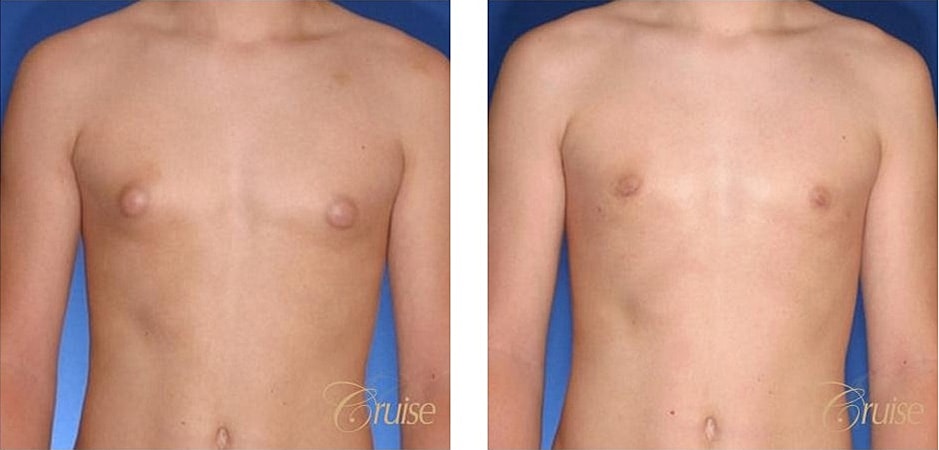
View our gallery of before and after photos to see the results from Type 1, Puffy Nipples, Gynecomastia surgery. Remember, each patient is unique and results will vary from person to person
1 of 3
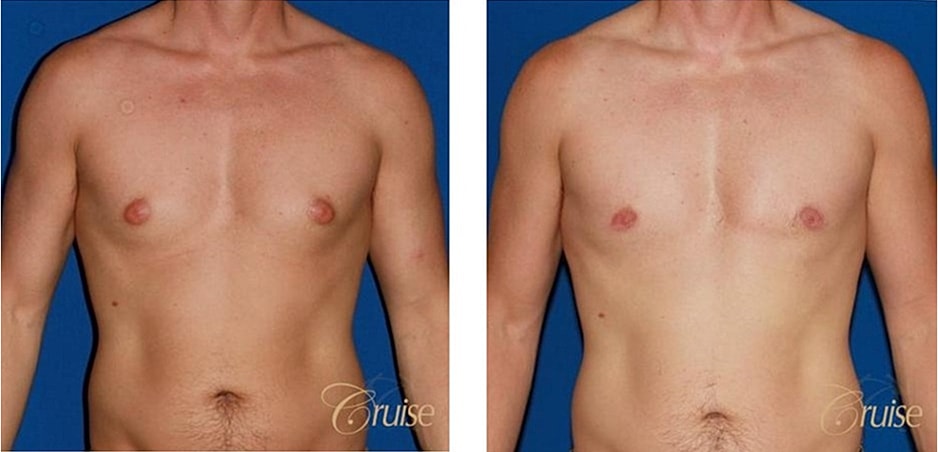
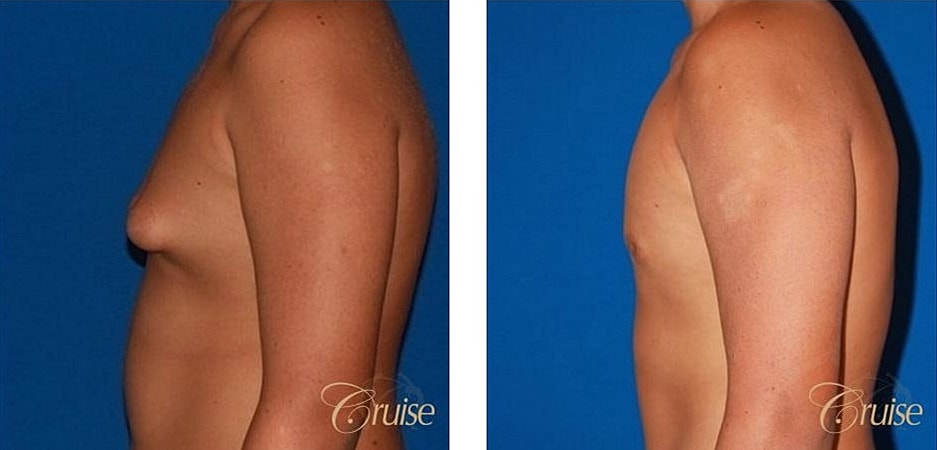
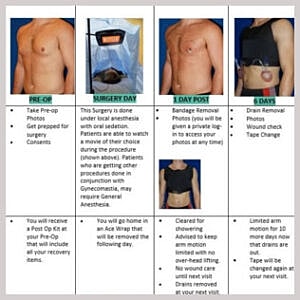
Gynecomastia surgery is an outpatient procedure performed under general anesthesia that typically takes 1 to 2 hours.
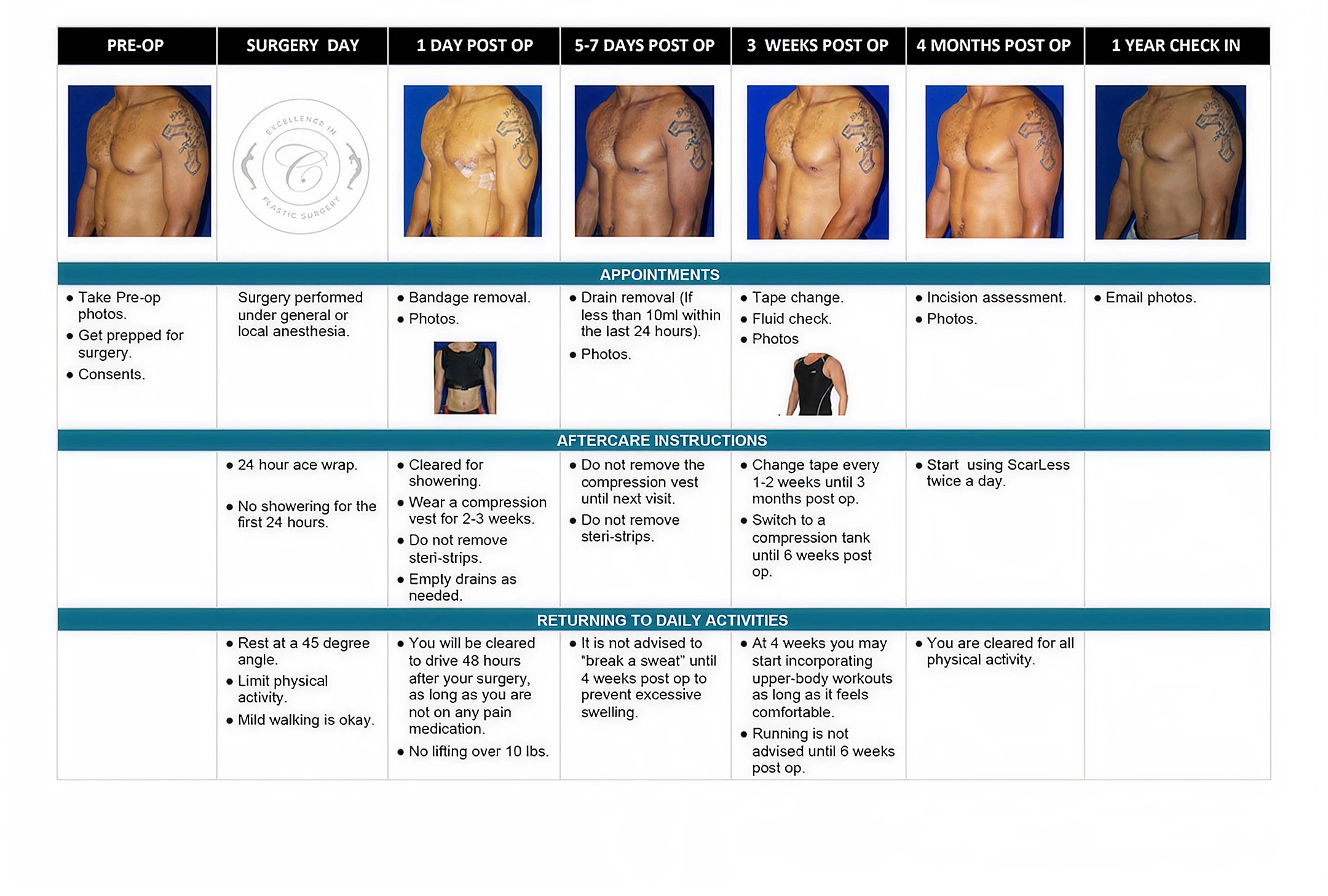
Incision placement will depend on the patient’s individual anatomy. Dr. Cruise places the incisions in natural creases, or along the border of the areola, to minimize visible scarring. Glandular tissue is excised, and liposuction may be used to remove any excess fat, if present. The incisions are then closed using precise techniques to promote smooth healing. After a short monitoring period, the patient returns home the same day with an aftercare plan in place.
The pain and suffering associated with gynecomastia is unlike any other condition in plastic surgery and perhaps in all of medicine. The range of its impact is stunning. Some men (usually older) can be relatively unaffected while others (usually the younger) can be completely devastated and even suicidal.
Unfortunately, because of the stigma associated with it, it is not always readily apparent what your loved one may be experiencing. In fact, the men or more commonly pubescent teenagers, who are most deeply affected go to great lengths to suffer alone. The Internet becomes the only one they can talk to. This dangerous combination of deep emotional pain and isolation makes them particularly vulnerable to exploitation. Exploitation that takes the form of the literally thousands of “miracle” cures that have no medical merit to the more nefarious types looking to take advantage of the the emotionally weak.
The pain and suffering associated with gynecomastia is unlike any other condition in plastic surgery and perhaps in all of medicine. The range of its impact is stunning. Some men (usually older) can be relatively unaffected while others (usually the younger) can be completely devastated and even suicidal.
Wide spectrum of outward expression from normal to:
“It feels embarrassing having a femininely shaped chest. I didn’t feel masculine and it caused me great anguish. Usually I avoided situations that required me to take my shirt off, like swimming. I would hunch my shoulders so that my shirt would drape over my chest, because I was afraid other people would notice my chest. A friend of mine told me I had man-boobs and I immediately realized that other people noticed what I had seen all along. I immediately felt embarrassed and wanted to disappear. Normally I would wear loose fitting shirts and hunch my shoulders so that my chest wouldn’t protrude. I was unable to stick my chest out with pride (literally). Try diet and exercise to see if you can reduce the appearance of your gynecomastia. If you’re still unhappy, research a competent surgeon. That’s the route I took and I was fortunate enough to find Dr. Cruise.
I did pursue gynecomastia surgery and the only regret I have is that I did not do it sooner. I’m so pleased with the results that I can not wait for the summer so I can walk along the beach with my shirt off. The boost to my confidence has been enormous. I totally believe it was worth it. The biggest impact I’ve seen (besides my confidence) is that I’m able to stand up straight again without worry about my “man-boobs” protruding. Something as simple as standing up straight not only makes me look more confident, but I feel more confident. “
How parents can help when they notice some or any of the concerns/signs below:
Most of the time, your son will not want to “speak up” about his embarrassment of Gynecomastia. In addition, he probably does not even know there is a name for the condition that he suffers with. The key here is to educated the child on Gynecomastia. The best way is to first approach your child and ask them why he has not been going to the pool or avoiding shirtless situations. If you have a specific example, use it. Have this conversation in a private place where he has your full attention and feels safe to open up. Using media coverage such as the article in Parenting OC is a good way to break the ice.
Some intro statements could be:
Very important: Let your child know that you are judgment-free.

Gynecomastia surgery is a way to feel like the best version of yourself physically and mentally. Dr. Cruise has performed over 5,000 gynecomastia surgeries and is available to meet you for a consultation. Start by filling out our online contact form or call our office at 949-644-4808