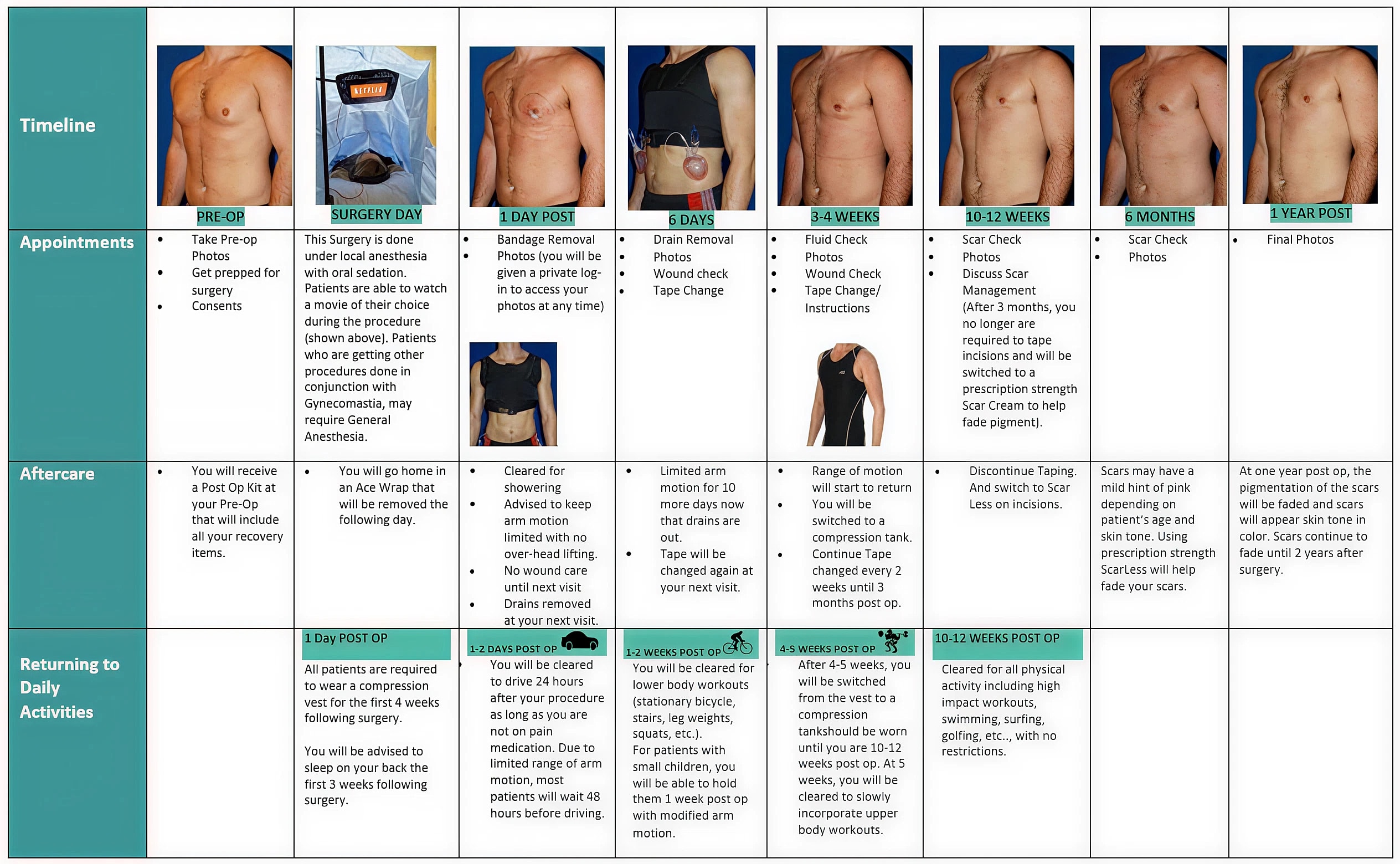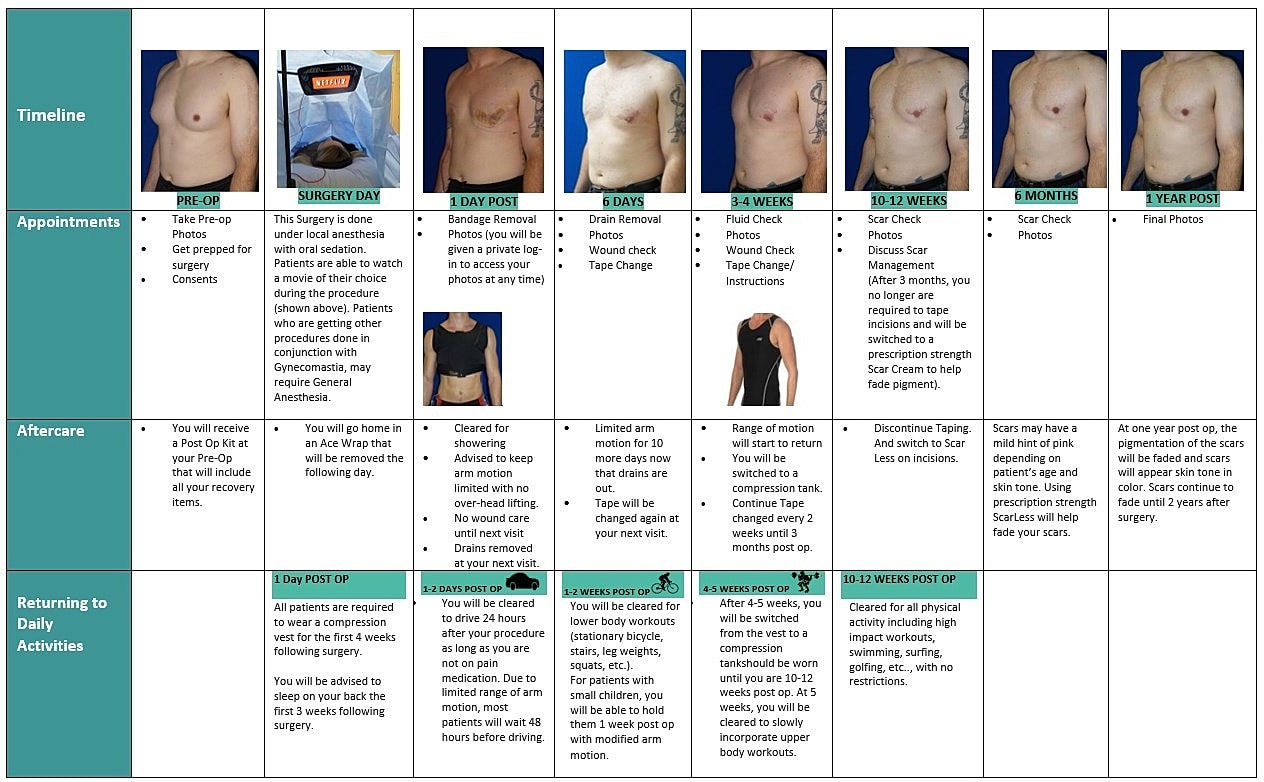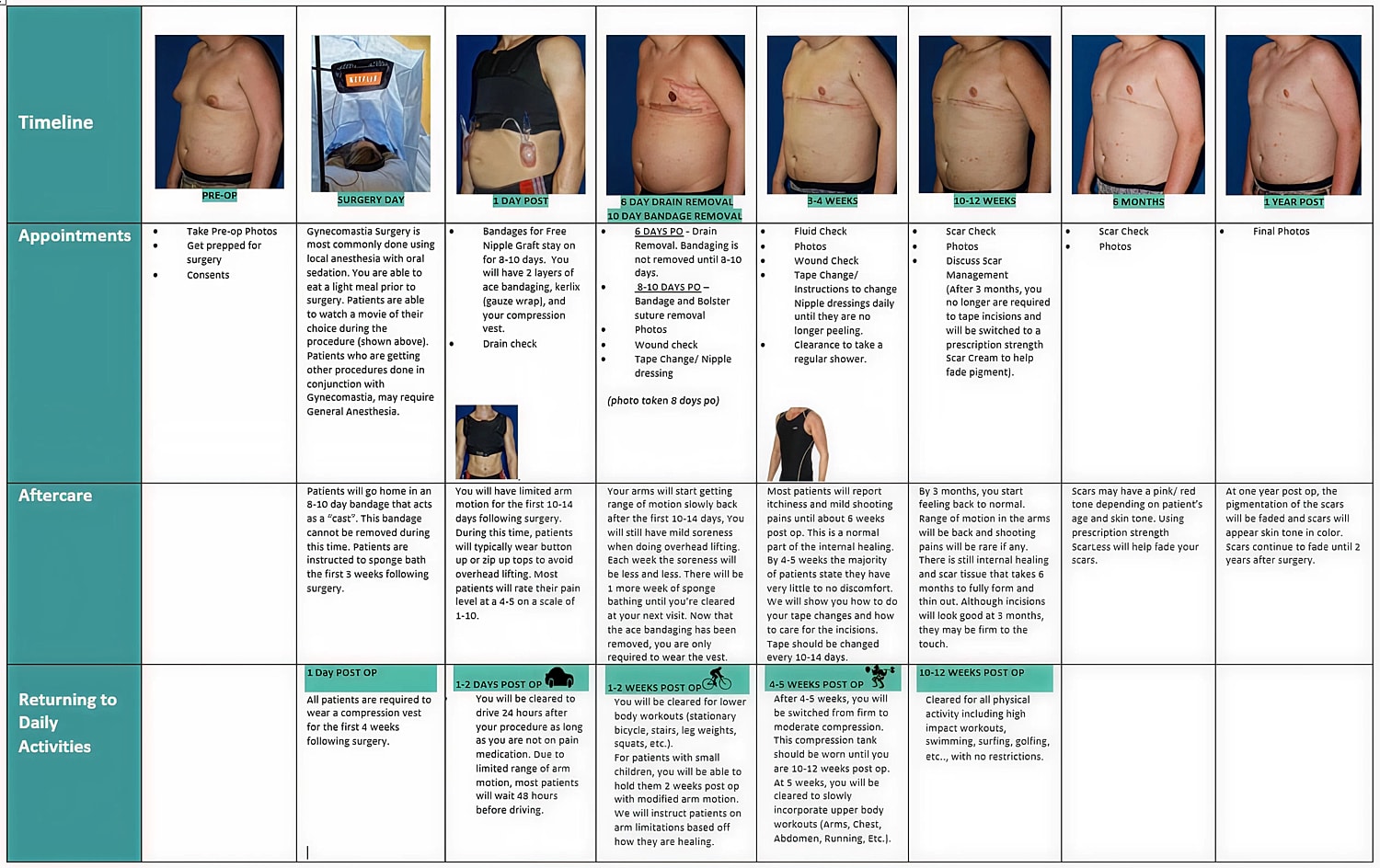





Recovering from gynecomastia surgery is different for everyone. Dr. Cruise has compiled a list of side effects and surgery recovery care steps to help make the most of your downtime and overall results.
Below you will find a comprehensive list of important instructions and guidelines for post-operative care after gynecomastia surgery with board-certified plastic surgeon Dr. Cruise. You can also click on the image below to view our exclusive surgery recovery healing timeline created by Dr. Cruise to help gynecomastia patients better understand what to expect and know during recovery.
One of the key factors to a successful surgery recovery is following the instructions and guidelines provided. Our goal is for our gynecomastia patients to have the best surgical journey possible.
If you have already had surgery with another surgeon, please use the information below as a guideline only. Each surgeon has his/her own specific surgery recovery instructions and healing guidelines they will want you to follow.
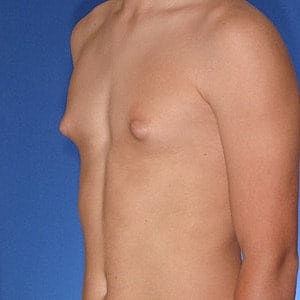
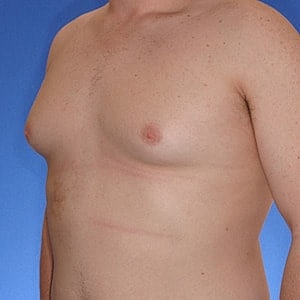
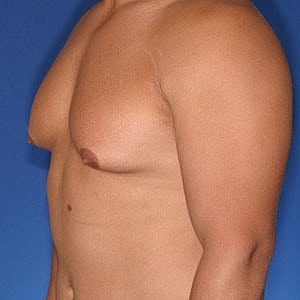
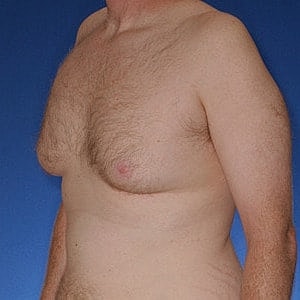
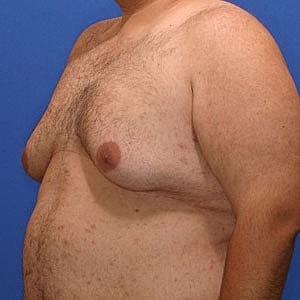

Understanding your recovery is a crucial part of the gynecomastia surgery process.
Dr. Cruise and our dedicated team will provide you with detailed post-operative instructions tailored to your specific surgery and healing needs. For our out-of-town patients, we ensure comprehensive guidance and support to make your recovery as smooth and comfortable as possible. Contact us today to discuss your personalized recovery plan.
Schedule your gynecomastia treatment consultation.
Click the images below to expand for full view
Following gynecomastia surgery, your smooth recovery and treatment satisfaction are our top priority. Here, Dr. Cruise has provided all of the details needed to ensure you heal optimally and feel supported throughout every step of your recovery.

The anesthesia Dr. Cruise uses is specifically designed to avoid nausea after gynecomastia surgery; however, some patients may still experience this. If nausea occurs, take the Zofran tablet immediately. Pain medications and antibiotics can often cause nausea as well. Be sure to take these medications with food. If your nausea persists, you may consider stopping the pain medication. Take 2 Celebrex to help with pain/discomfort.
You may apply ice packs or gel packs to the breast area for the first 2 days. Do not apply directly to skin. The area will be numb during surgery recovery, so you may not feel the cold from the ice, which could result in frost-burning the skin.
If bruising occurs, you can apply Arnica Montana cream to help them fade more quickly. Avoid applying the cream directly on the incisions. Bruising usually clears up within 2-3 weeks.
Be sure to take all medications as directed. If you develop a reaction to any of the medications, please stop taking it and call our office so we can prescribe an alternative.
You may experience decreased energy levels for up to 8 weeks. Try to maintain a healthy diet and drink lots of water throughout the recovery process. It’s also important to get as much sleep as you can and listen to your body. It will tell you when you are doing too much too soon.
It is common for the pecs to be swollen and tender after gynecomastia surgery. Do not be concerned as this will subside with time. It’s important to know the body heals asymmetrically. One side of the chest might be more swollen than the other, but this is common, do not be concerned. If there is a strong difference in the swelling, please call our office. It takes approximately 3 months to achieve the final results.
During the healing process, your surgical site may itch. This is normal and can be a sign of progression through your recovery. Avoid scratching or itching the area, so you don’t cause further irritation. You can use hydrocortisone cream around the area to help minimize the discomfort.
Your nipples may become hypersensitive or lose sensation for the first 3 months. In most cases, this will go away on its own with time. When the nerves start to heal, you may feel sudden sharp pains. This is a sign that your body is progressing through the healing process.

Sleep
After gynecomastia surgery, it is important to rest and sleep at a 45-degree angle on your back for at least the first 3 days. Continue to do so until you feel comfortable sleeping the way you normally do. This will vary from patient to patient. Important – Anesthesia may make it very difficult to get to sleep the night after surgery. In order to maintain your normal sleep schedule, we recommend taking a Xanax 1 hour before you plan to sleep. This will help tremendously. Do not take the Xanax at the same time as your pain medication. Take them at least 1 hour apart.
Shower
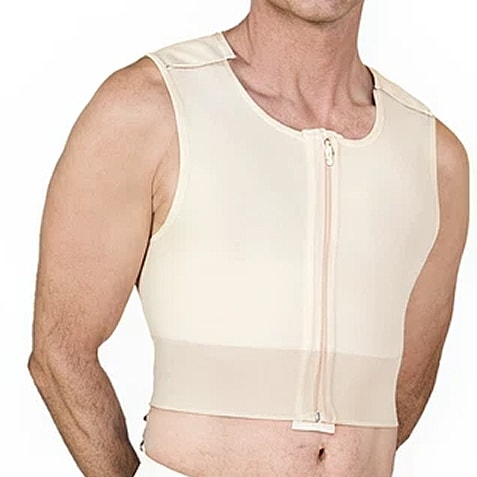
If possible, don’t shower for the first 24 hours following your gynecomastia surgery. Your chest will be bandaged and you don’t want to get them wet. If you must bathe, take a sponge bath and avoid getting water on the bandages. After your first visit, Dr. Cruise will remove some of the bandages and check your chest. Once you arrive back home it is fine to shower. Be careful as it is not uncommon to be dizzy. Simply remove the garment and take a cool shower. Allow the water to drizzle down over your chest. It is OK for the surgical tape on the incisions to get wet. Afterwards, pat dry and put your garment/bandage back on. No baths for the first 2 weeks or as long as the incisions are still open.






Incisions will eventually fade to an unnoticeable color. It may take up to a year for the incisions to fully heal. Please continue to use the surgical tape provided by our office for a period of approximately 12 weeks or until Dr. Cruise advises otherwise. After that time, you might be advised to start using ScarLess® scar gel to help improve the redness. Incisions always improve over time and require patience in doing so.
After weeks or even months some patients begin to notice lumpy bumpy areas in their chest. This is scar tissue formation beneath the skin, which is a common side effect of gynecomastia.

While nutrition is always important for your overall health, it’s especially important prior to and following gynecomastia surgery. Increasing your protein intake, Vitamin C, and Omega 3 can provide a better environment for your body to heal. There are numerous other dietary recommendations you should consider as part of your post-operative care.
There are various healing aids on the market that can help decrease bruising and swelling and contribute to a quicker healing process. Some of the vitamins and supplements to know about are:
For specific information about issues that can arise during the healing process, click the button to the right.
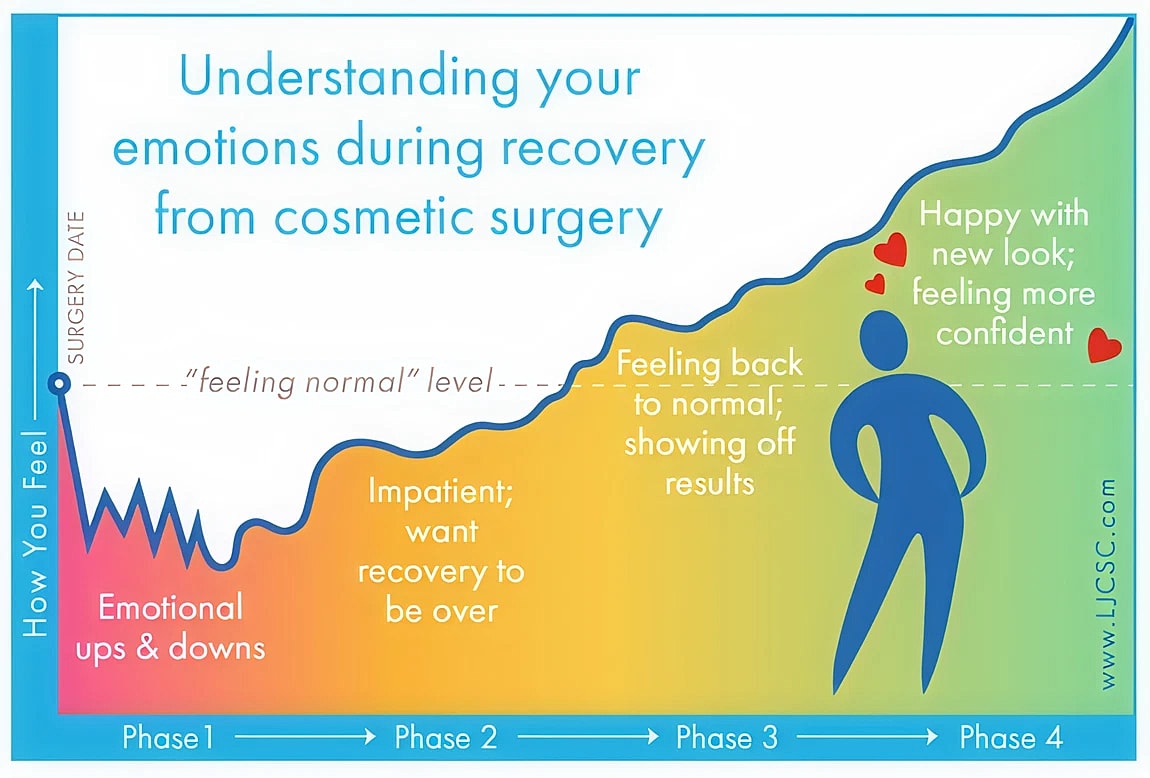
It is very common to experience emotional ups and downs following surgery. This can happen immediately after or days and even weeks post-operatively. Remind yourself this is normal and will pass. Reach out to those who will listen and be supportive. Remember you are not alone. If you don’t have family or friends who you feel will help you through the emotional lows, reach out to support groups on CSF, Real Self, or Gynecomastia.org.
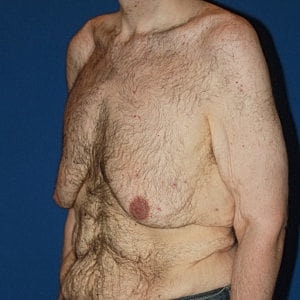
Male Breast Lift With Donut Incision
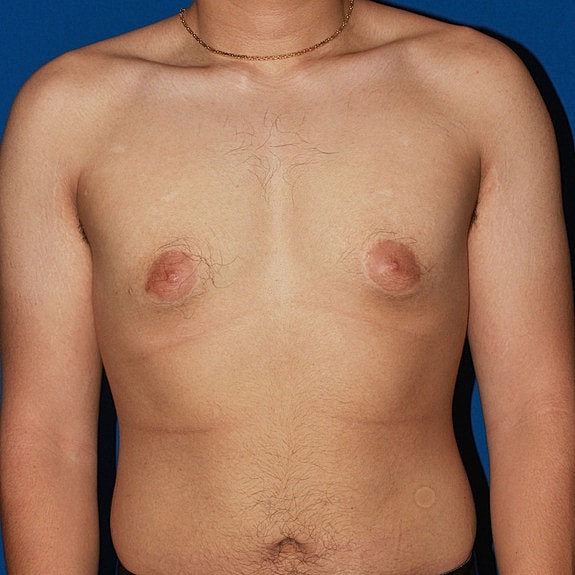
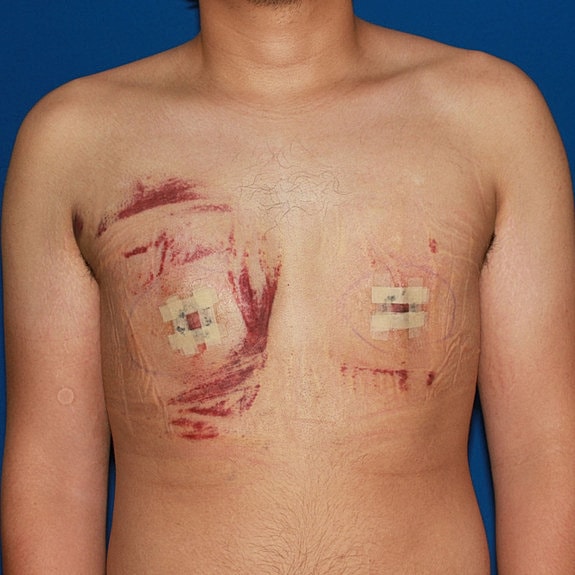
Asymmetric bruising and swelling
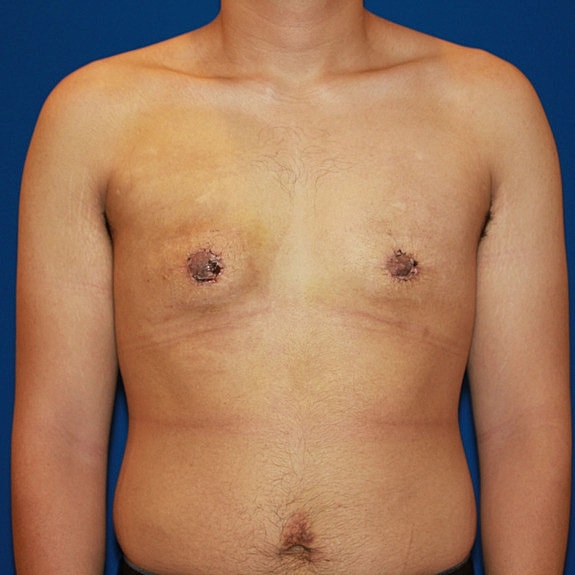
Incisions still healing. bruising fading
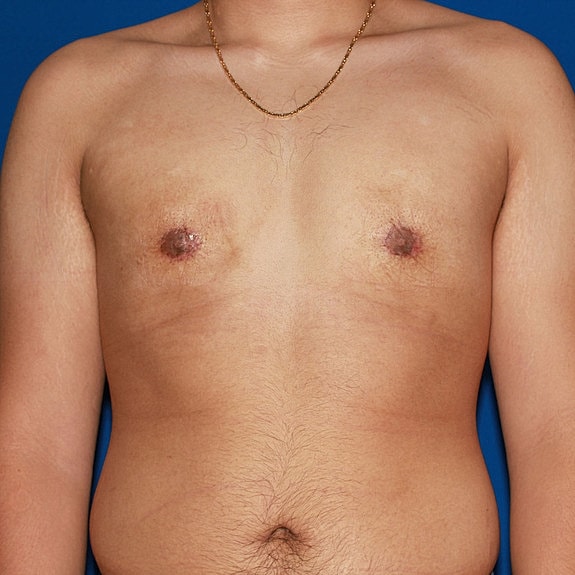
Scars are starting to fade
It is important to walk at least 5 minutes every hour while you’re awake for the first 3 days following surgery to prevent blood clots (do not overdo it). Pay specific attention to leg pain and swelling particularly if it occurs only on one side. If you notice persistent calf pain and/or swelling contact the office.
Usually, shortness of breath after male breast reduction is due to the tightness from the implant or post-surgical anxiety. If, however, it becomes significant where you can’t catch your breath, it is recommended to give us a call.
Make sure to cough and take deep breaths, as a fever is usually in the lungs for the first 3 days after surgery. Expanding the lungs with deep breaths easily corrects the fever. If you have a fever over 101 degrees, call us.
If you notice a substantial difference in the swelling of one of the sides of your chest, give us a call.
Constipation is one of the biggest problems we encounter after surgery, yet, few people talk about it. If you have a history of constipation, we strongly encourage you to take Colace daily starting the day of surgery. If you have not had a bowel movement by day 2, begin drinking 1 glass of prune juice daily until it resolves. Otherwise, you may want to stop taking Vicodin or other narcotic pain medication and take a laxative (Ex-Lax or Correctol).
Continue with the Celebrex as this does not cause constipation. Narcotic pain medications such as Vicodin are notorious for causing constipation. Make sure you are walking and drinking plenty of fluids as this stimulates the GI tract. Eating fiber-rich food can also help regulate bowel movements.
Infection after removing excess breast tissue is very rare but, as with any surgery, it is possible. It would become noticeable usually between 10 days and 4 weeks after surgery. During this time pain and swelling are normally decreasing. If, however, pain and swelling are increasing we need to look into the cause.
Significant drainage that requires frequent gauze change needs to be evaluated as well. Call the office immediately. Keep in mind, though, the number one cause of increasing pain and swelling after breast augmentation is overdoing it and not an infection.
Please call the office during regular business hours @ 949-649-8296, after-hours call Dr. Cruise @ 949-310-8055.
If either of the previous numbers fails, please call our backup line @ 949-304-6980. If you feel you have a problem, do not hesitate to contact us. We are here to make sure you get the absolute best care possible.
Recovery from gynecomastia surgery is generally well-tolerated and follows this general timeline:
LA Gynecomastia
Dr. Cruise has developed a comprehensive classification system to identify the specific type of gynecomastia, which is crucial for determining the most effective treatment approach. Each type requires a tailored surgical approach, ranging from liposuction to glandular excision or skin tightening procedures.
Common signs of gynecomastia include:
These symptoms can result from hormonal imbalances, certain medications, or other health conditions. A consultation with a qualified plastic surgeon, like Dr. Cruise, can provide a definitive diagnosis and discuss potential treatment options.
The amount of time needed off work depends on the nature of your job:
Sedentary Jobs: Most patients can return to desk jobs within 3–4 days post-surgery.
Physically Demanding Jobs: Jobs involving heavy lifting or strenuous activity may require 1–2 weeks off. Some patients may return sooner by modifying their duties or with assistance.
Dr. Cruise's office can provide documentation for your employer to facilitate time off or adjustments to your work duties during recovery.