Gynecomastia After Massive Weight Loss







Losing a significant amount of weight is a commendable achievement, but for some men, it brings unexpected challenges. Despite shedding pounds, enlarged breasts and sagging skin can remain, a condition known as gynecomastia, after weight loss.
This issue often results from a combination of residual glandular tissue and stretched skin that doesn't retract post-weight loss. Dr. Joseph T. Cruise, a board-certified plastic surgeon, specializes in male breast reduction surgery. With extensive experience treating gynecomastia, Dr. Cruise offers personalized surgical solutions to help patients achieve a flatter, more masculine chest contour. If you're struggling with excess breast tissue after weight loss, a consultation with Dr. Cruise can provide clarity and direction.


Gynecomastia is the medical term for enlarged male breast tissue. Gynecomastia is common in men who have achieved significant weight loss and is caused by breast tissue growth, often accompanied by excess skin. While weight loss can reduce fatty tissue, it doesn't eliminate glandular breast tissue, often requiring surgical intervention.
Additionally, the skin may lose elasticity, leading to sagging that further affects the appearance of the chest. This condition can impact self-esteem and body image, especially after the hard work of losing weight. Gynecomastia surgery restores a more masculine chest contour and can significantly enhance confidence and quality of life.
Gynecomastia surgery, sometimes referred to as male breast reduction, is designed to remove excess breast tissue and skin to achieve a flatter, more defined chest contour.
Each treatment is designed around the patient's unique anatomy and aesthetic goals. Dr. Cruise developed the Cruise Classification System to precisely identify your type of gynecomastia, allowing for highly customized treatment plans. The procedure is performed under general anesthesia at an accredited surgical facility in Newport Beach that specializes in plastic surgery. Dr. Cruise uses precision techniques to minimize visible scarring and provide a refined, natural-looking result.
The procedure usually takes 2–3 hours, and patients can return home the same day.

The surgical approach targets several issues associated with gynecomastia after weight loss:
By addressing these concerns, male breast reduction helps restore a more balanced and masculine appearance, enhancing the entire body contour.

Gynecomastia impacts your physical appearance, but it can also impact the way you see yourself and move through the world. Surgical correction can provide a sense of completion in your weight loss journey. Undergoing male breast reduction surgery after significant weight loss offers multiple advantages:
Ideal candidates for gynecomastia surgery after weight loss are men who have achieved a stable weight but still deal with persistent breast tissue and/or sagging skin. Surgical candidates should be in good overall health, free of any medical conditions that impair healing, and non-smokers---or willing to quit before and after surgery.
At your consultation with Dr. Cruise, he will review your medical history, evaluate your chest anatomy, and learn about your aesthetic goals to determine the most appropriate treatment plan for your specific needs.
Patients wear a compression garment during the initial healing phase to support healing and reduce swelling. Most patients can return to non-strenuous activities within a week, with full recovery expected in about a month and a half. It is important to avoid strenuous activities until cleared by Dr. Cruise, usually for 4–6 weeks. Your healing progress will be monitored at follow-up appointments, ensuring a smooth recovery and refined results.
The results of gynecomastia surgery after weight loss are typically long-lasting, provided that you maintain a stable, healthy weight. Subsequent weight gain can impact results, so it is important to continue eating a balanced diet and exercising regularly. After gynecomastia surgery, patients enjoy a flatter, more masculine chest contour and improved symmetry and proportion. Many patients report enhanced confidence in personal and social situations. These outcomes can significantly improve overall satisfaction with your body, helping you enjoy a broader range of activities--like going shirtless at the beach--and celebrate your success in your weight-loss journey.
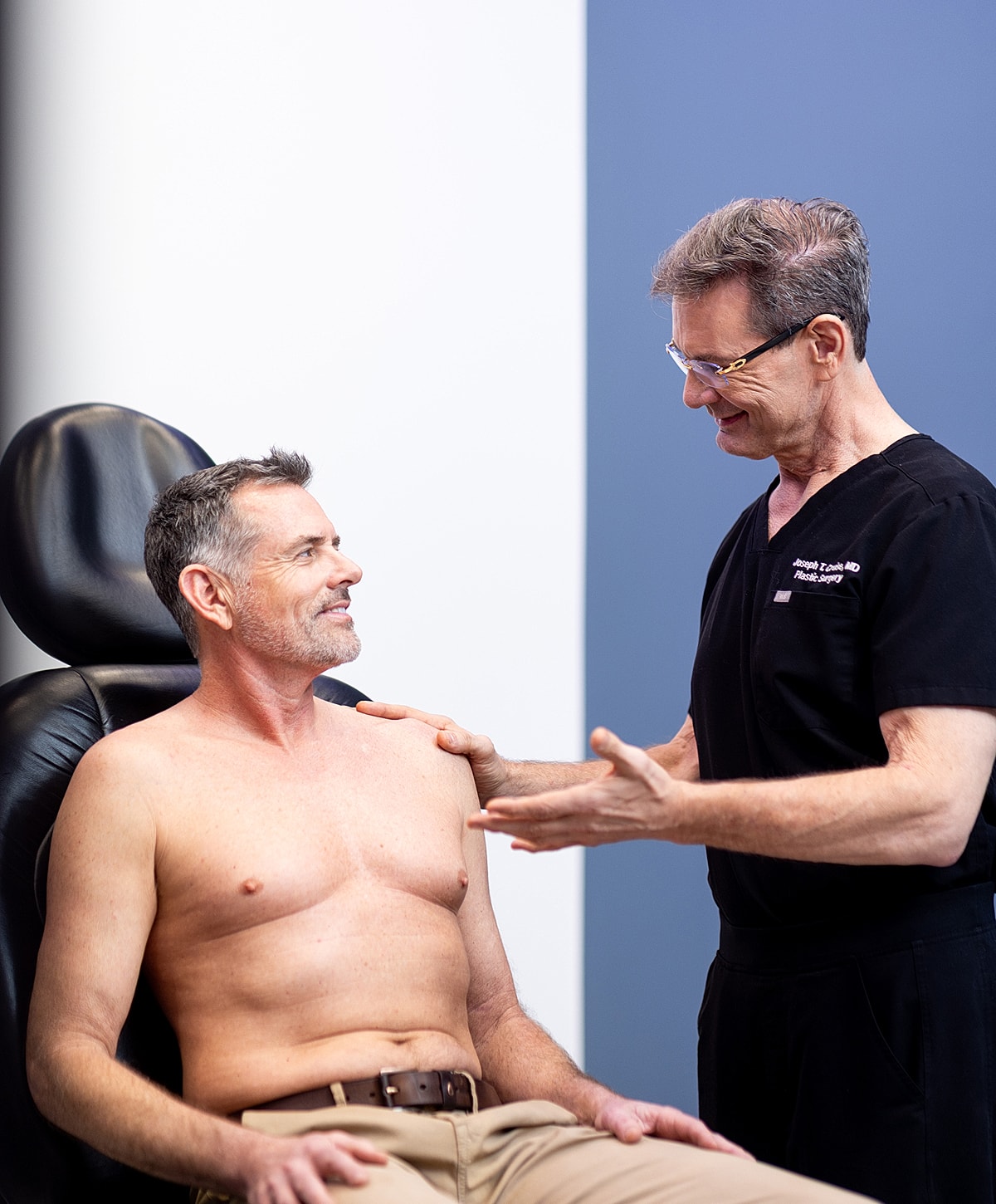
Dr. Joseph T. Cruise is a board-certified plastic surgeon with extensive experience and specialization in male breast reduction surgery. His patient-centered approach ensures:
By choosing Dr. Cruise, you're entrusting your care to a dedicated professional committed to helping you achieve your aesthetic goals.

On average, skin excess gynecomastia surgery ranges between $13,000 and $16,000. The cost can vary dramatically from patient to patient. You will find your total cost at your consultation with Dr. Cruise on the phone or in-person at his Newport Beach gynecomastia practice.
While incisions are necessary, Dr. Cruise employs techniques to minimize scarring. Over time, scars typically fade and become virtually imperceptible.
Most patients can resume non-strenuous work within a week. However, this may vary based on individual recovery.
Most patients can resume light cardio or lower body workouts about one week after male breast reduction surgery, depending on their healing progress. However, chest exercises such as push-ups or bench presses should be avoided for at least four weeks to allow proper healing of the surgical site. Dr. Cruise will provide personalized guidance based on your individual healing progress.
If the underlying causes, such as hormonal imbalances, are addressed and a stable weight is maintained, recurrence is unlikely. Subsequent weight gain or changes in hormone levels caused by medical conditions or certain medications could impact your results, so it is important to maintain a stable weight and healthy lifestyle.
As with any surgical procedure, risks include infection, bleeding, and scarring. These risks are minimized when working with an experienced, board-certified plastic surgeon.
Liposuction may be used in conjunction with excision of excess glandular tissue, but it may not be sufficient to address gynecomastia, especially when glandular growth and excess skin are present.
Preparation includes medical evaluations, cessation of certain medications, and lifestyle adjustments as advised by Dr. Cruise.


